
How often should you change the oil in a BMW? This is what we saw after 7,155 km
How often should you change the oil of a BMW? It is a question we regularly get at BimmerStore.
On some BMWs the Condition Based Service system can indicate quite a long oil interval. Someone who uses their car for only a few years may look at that differently than someone who wants to keep their BMW for ten, fifteen or twenty years.
For BMWs that customers want to keep for the long term, we therefore usually recommend an oil change around every 10,000 kilometers or once a year, whichever comes first.
But is that not excessive when BMW itself allows longer service intervals?
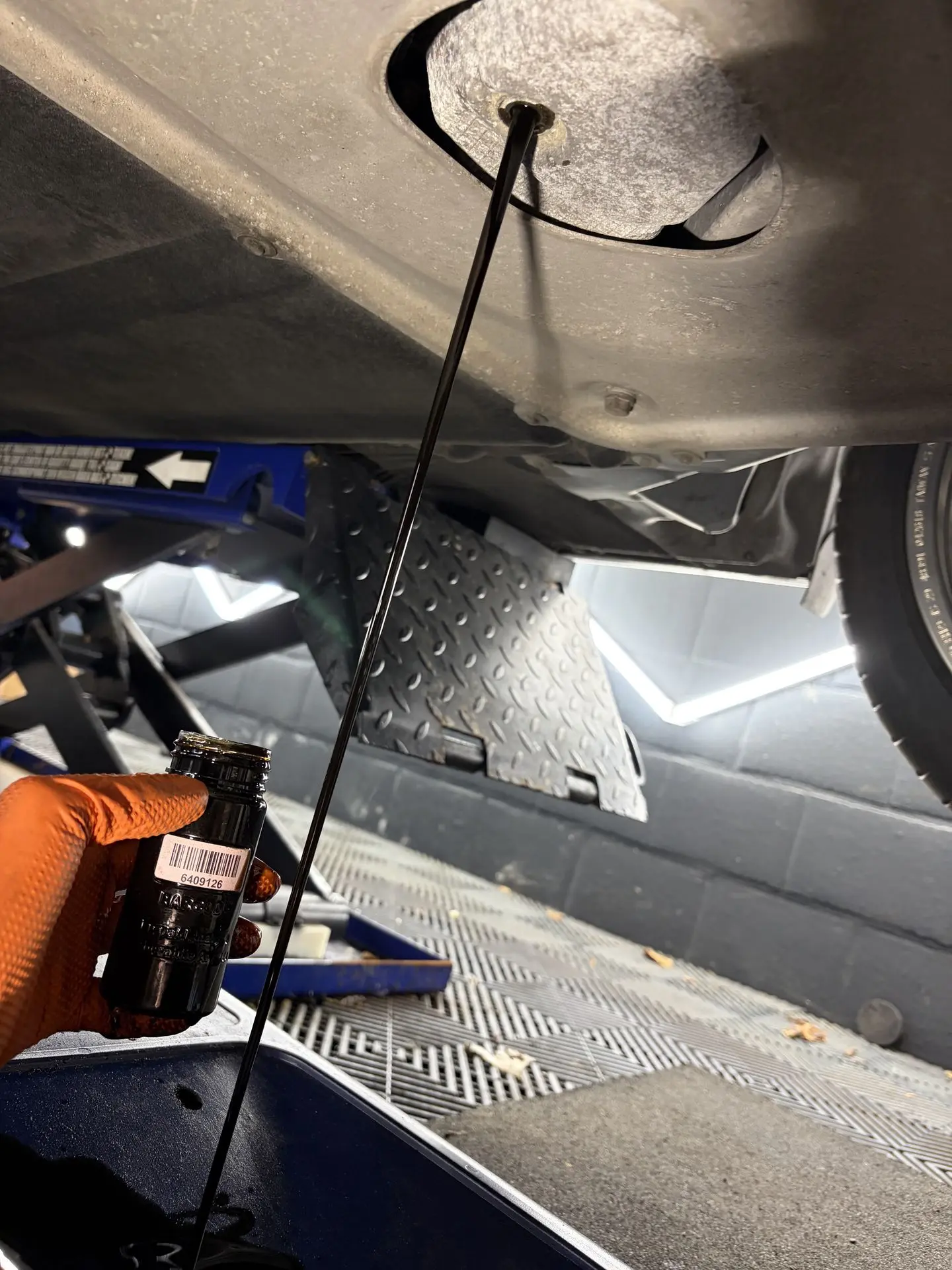
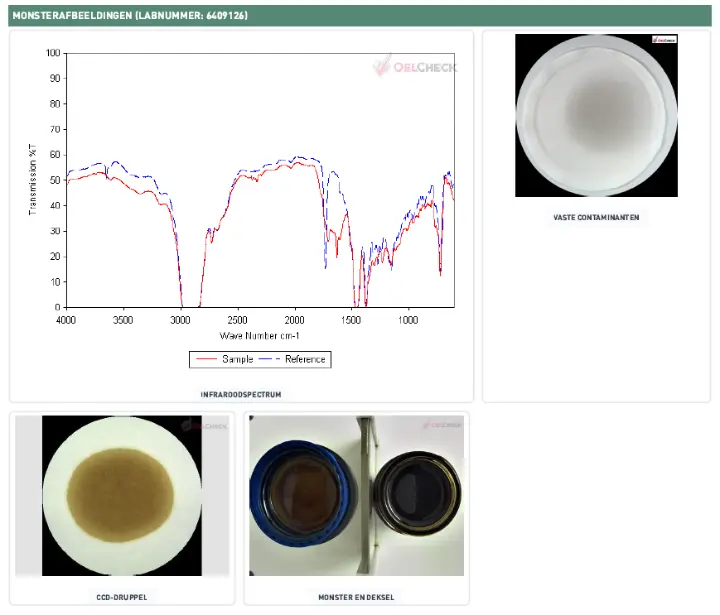
With this BMW M3 F80 with the S55 engine we had the chance to look at this not only from theory or experience. During the oil change we took a sample of the used engine oil and sent it to the independent laboratory OELCHECK.
At that point the oil had only 7,155 kilometers on it.
The result was interesting: the engine's wear values were normal, but the condition of the oil still received a warning.
How often should you change the oil in a BMW?
For those looking for a practical answer right away:
For a BMW that is to be kept for the long term, we usually recommend replacing the engine oil and oil filter every 10,000 km or at least once a year.
That is our preventive maintenance advice, not the official service interval that applies to every BMW.
For years BMW has been working with Condition Based Service (CBS). The car calculates the service requirement based on time, use and driving conditions instead of solely on one fixed mileage interval. BMW itself states that CBS takes different operating conditions into account and indicates via the Control Display when, among other things, the engine oil is due for service.
Moreover, on many European BMWs of this F80's generation, option code 8KA was used: oil service 24 months/30,000 km. F80 M3s were also delivered with that configuration. The actual CBS interval can of course change during use.
So we are not saying that BMW prescribes that every BMW must always drive exactly 30,000 km on the same oil.
Our question is a different one:
Do we want to use the oil until the service system says it needs replacing, or do we deliberately want a larger safety margin for a car that has to last for many more years?
Why did we analyze the oil of this BMW M3?
The owner of this M3 maintains the car carefully and wants to keep it for the long term.
The question had even been raised whether it would make sense to preventively replace the crankshaft or connecting rod bearings of the S55.
Instead of opening up a correctly functioning engine without a clear technical reason, we decided to gather information first.
The oil analysis request therefore specifically stated that we were interested in the condition of the engine and oil and in any indications of problems around the crankshaft bearings.
The oil used was BMW 0W-30 LL-12 FE. It had been changed on April 7, 2025 and the sample was taken on August 13, 2026. In that period the oil had only 7,155 km on it.
That means:
few kilometers, but about sixteen months of use.
And that is exactly what makes this analysis interesting.
What did the oil analysis of the BMW M3 show?
Let us start with the good news.
The main wear values measured were:
| Wear metal | Result |
|---|---|
| Iron | 35 mg/kg |
| Aluminum | 6 mg/kg |
| Copper | 5 mg/kg |
| Tin | 1 mg/kg |
| Lead | 0 mg/kg |
| PQ index | <25 |
OELCHECK explicitly concluded that the wear values were within normal limits. The individual wear metals confirm that picture.
That matters, because bearing wear was exactly what the owner was worried about.
Of course, an oil analysis cannot prove that every bearing shell is physically perfect. For that, an engine has to be opened.
But the analysis gave us no wear pattern that at that moment constituted a technical reason to preventively open up a properly functioning S55.
So why did the oil receive a warning anyway?
This is where the analysis becomes much more interesting for the discussion about the BMW oil interval.
OELCHECK rated the sample as:
WARNING
Not because there was an excessive amount of metal in the oil, but because of several parameters that say something about the condition and chemical load of the used engine oil.
Among other things, the following was measured:
| Oil condition | Result |
|---|---|
| Gasoline in oil | 1,1% |
| Oxidation | 24 A/cm |
| Nitration | 15 A/cm |
| Base Number (BN) | 5.11 mgKOH/g |
| Acid Number (AN) | 4.47 mgKOH/g |
| i-pH | 4,12 |
The laboratory reports increased oxidation and nitration, a higher than expected acid number and a lowered i-pH. As possible factors, OELCHECK mentions oil aging, high temperatures, fuel influence and combustion products, among others.
And that even though this oil had only 7,155 kilometers on it.

So was the engine oil worn out after 7,155 km?
No.
That distinction is important.
This analysis does not prove that engine oil no longer provides lubrication after 7,000 km or has to be replaced immediately.
The viscosity was still 11.35 mm²/s at 100 °C and the measured engine wear was normal.
So it would be technically incorrect to write:
“After 7,000 km the oil had lost its lubricating properties.”
What we can say objectively:
after just 7,155 km and about sixteen months, several parameters that point to chemical load and aging of the oil had already clearly changed.
For us, that is exactly why an oil change should not be judged on mileage alone.
Engine oil does more than just lubricate
Engine oil of course forms a lubricating film between moving parts, but its function goes much further.
It helps dissipate heat, keeps contaminants in suspension so the oil filter can remove them, protects metal surfaces against corrosion, helps seal between certain moving parts and contains additives to keep harmful combustion products and acids under control for as long as possible.
During use, that oil changes constantly.
Fuel and combustion gases can end up in the crankcase to a limited extent. Additives are consumed. The oil is repeatedly heated up and cooled down. Oxidation increases and acids can build up.
That is why the question “how many kilometers has the oil done?” alone does not tell the full story.
Does BMW oil also need to be changed every year if you drive little?
With a car that covers only a few thousand kilometers a year, we regularly hear:
“But the oil has hardly done any kilometers.”
That is true in terms of kilometers, but not necessarily in terms of load.
Many short trips mean a relatively large number of cold starts. The engine then spends less time at its full operating temperature, and fuel, condensation and combustion products can more easily remain in the oil.
So time, temperature cycles and the driving profile also play a part.
This M3 is a nice real-world example of that: only 7,155 km of use, but about sixteen months between the oil change and the sample.
That is why we consider one year a useful upper limit for BMWs whose owner is deliberately aiming for a long service life, even when only few kilometers are driven.

Is 30,000 km between BMW oil changes too long?
There is no honest universal yes-or-no answer to that.
BMW has designed and tested its engines, oils and Condition Based Service system around the prescribed maintenance strategy. It would be wrong to conclude from a single oil analysis that every BMW following a long CBS interval will suffer engine damage as a result.
This analysis does not prove that at all.
But the same goes for the opposite conclusion.
The fact that a manufacturer allows a certain service interval does not automatically mean that making maximum use of that interval is the maintenance strategy we would choose when maximum service life is the main goal.
A BMW that mainly makes long trips and quickly reaches full temperature loads its oil differently than the same BMW that sees many short trips, cold starts and city traffic.
That is why we consider a shorter preventive oil interval reasonable for customers who want to keep their car for the long term.
What does ‘lifetime oil’ actually mean at BMW?
We see an interesting comparable example with automatic transmissions.
On many cars the oil in the automatic transmission is treated in the service schedule as a lifetime fill: so the normal service schedule contains no classic periodic oil change as there is for engine oil.
But what does ‘lifetime’ actually mean?
Not necessarily:
“This oil stays in perfect condition indefinitely for as long as the car exists.”
That becomes clear when we look at ZF, the manufacturer of many automatic transmissions used in BMWs.
ZF itself describes its 5-, 6-, 8- and 9-speed automatic transmissions as having a maintenance-free fill. At the same time, in its current 2026 lubricant list, ZF recommends an oil change after approximately 150,000 km. At high temperatures, under heavy load or when the car's earlier use is unknown, an even shorter interval can make sense according to ZF.
At first glance that seems contradictory, but it actually is not.
An oil can be regarded as ‘lifetime’ within the maintenance concept and still age thermally and chemically during its service life.
ZF itself says that high operating temperatures, load and the individual driving profile affect the service life of transmission oil.
That is why, for BMWs with for example a ZF 8HP automatic transmission, we do recommend a preventive transmission service in certain situations, even when the on-board computer does not ask for it of its own accord.
This article is of course about engine oil, but the example illustrates an important principle:
a service schedule and a maintenance strategy aimed at maximum service life do not have to be exactly the same.
Factory interval and maximum service life are not the same goal
When determining service intervals, a car manufacturer has to take far more into account than just the question:
“How do we keep this engine in the best possible condition for twenty years?”
A modern maintenance strategy also has to be practical and affordable for hundreds of thousands of drivers with completely different operating conditions.
Maintenance costs, the time a car spends in the workshop, ease of use, fleet and lease use and the total running costs of a new car all play a role.
In itself, that is not strange at all.
But as a result, someone who buys a BMW new and sells it again after three or four years can make a different trade-off than someone who intends to drive the same car for ten, fifteen or twenty years to come.
And we consider that difference important.
Why long service intervals are attractive on new cars
Suppose someone is comparing two new cars.
With brand A, the car needs servicing, for example:
every 2 years or 30,000 km
and with brand B, hypothetically:
every 3 years or 60,000 km.
For someone who leases the car for only three or four years, brand B may look more attractive on paper.
After all, less maintenance means fewer workshop visits and lower maintenance costs during that first period of use.
But now suppose you want to keep that same car not for four, but for fifteen years.
Then the calculation changes.
The price of one extra oil change is relatively small compared to the cost of a turbocharger, VANOS components, crankshaft bearings or a complete engine.
That is why at BimmerStore we distinguish between two questions:
“What is permitted according to the service schedule?”
and:
“What would we ourselves recommend when maximum service life is the goal?”
Those answers do not necessarily have to be the same.
The problem is not that BMW prescribes maintenance too often
We sometimes get customers who have simply followed their BMW's CBS system for years and wonder why we would replace oil sooner.
Sometimes we are even asked:
“Can that oil not just stay in for three years or 50,000 to 60,000 kilometers?”
There is also a suspicion in the opposite direction: that car manufacturers deliberately prescribe frequent maintenance because dealers make money from it.
This M3 shows exactly why that reasoning is too simple.
BMW allows considerable service intervals for certain generations and markets. Yet the used engine oil of this M3, after only 7,155 km, but about sixteen months of use, already received a warning from the independent laboratory because of the condition of the oil.
At the same time, the engine's wear values were still normal.
So the point is not that BMW sends its customers to the garage unnecessarily often.
On the contrary: for an owner who is after maximum service life, we find some permitted intervals rather generous.
New BMW, lease car or a car for the long term?
That brings us to something that is often forgotten when it comes to maintenance: what does the owner actually want to do with the car?
When someone says:
“I bought this BMW new but will trade it in again within three years.”
then they can perfectly well decide to simply follow the prescribed CBS maintenance.
But when someone says:
“This is my M3. I want to look after it and still be driving it in fifteen years.”
then we think it makes sense to carry out certain maintenance work more preventively.
Not because BMW does not know its own engines.
BMW of course has far more development and test data on, for example, the S55 than we could ever collect.
But BMW has to develop one maintenance concept for a great many different users.
We, on the other hand, can look at that one car and that one owner.
And for someone who wants to keep their BMW for the long term, we consider an extra oil and filter change a particularly cheap form of preventive maintenance.
This oil analysis makes that discussion concrete
Normally the discussion about oil intervals remains rather theoretical.
One person says:
“BMW prescribes it that way, so it will be fine.”
The other says:
“I always change it every 10,000 km.”
With this M3 we at least have measurement data.
The oil had only 7,155 km on it. It had, however, been in the engine for about sixteen months. The viscosity was still correct and the measured engine wear was normal, but oxidation, nitration, acid number, i-pH and fuel influence had changed enough for OELCHECK to give the sample a warning rating.
That does not prove that a BMW automatically suffers engine damage at 20,000 or 30,000 km.
Nor do we claim that.
What this analysis does show is that oil can already clearly change chemically long before a particularly high mileage is reached.
And that is exactly why, for customers who want to keep their BMW for the long term, we prefer a larger safety margin.
Why we recommend about 10,000 km or one year
Our recommendation of about 10,000 km or one year is deliberately conservative.
It does not mean that engine oil is suddenly bad at 10,001 km.
It simply gives us a generous margin before we let the oil age further for a long time.
Especially with powerful turbo engines such as the BMW S55, we consider that a logical investment. Engine oil works there under high thermal and mechanical load and is important for, among other things, bearings, turbos and various hydraulically controlled engine systems.
An extra oil and filter change costs relatively little compared to the value of a BMW engine or turbocharger.
With this M3 we also have actual measurement data: after 7,155 km engine wear was normal, but after about sixteen months the oil already showed enough chemical change to receive a warning from the laboratory.
For us, that supports the choice not necessarily to leave oil in until the maximum permitted interval.
Fuel in the engine oil: is 1.1% a problem?
In this oil, 1.1% gasoline was measured.
In itself, that is no reason for us to immediately replace injectors, piston rings or other engine parts.
On direct-injection gasoline engines, cold starts and the driving profile, among other things, can affect the amount of fuel that ultimately ends up in the engine oil.
OELCHECK itself mentions several possible causes and expressly states that no clear-cut cause of damage can be derived from this analysis.
So the right approach is not:
“There is fuel in the oil, so there is engine damage.”
But rather:
record the value and compare it again at the next oil analysis.
Why a second oil analysis becomes even more interesting
A single oil analysis is a snapshot.
The real added value comes when the same engine is tested again at successive oil changes.
Then we can track, for example, whether iron, copper, aluminum, fuel dilution, oxidation and other values remain roughly stable or start to change.
That way you build up a reference for that specific engine.
With a special or valuable car, that is far more interesting than comparing one random value with an internet forum where engines with different mileages, oil, tuning and operating conditions are all discussed together.

What does the oil analysis say about S55 rod bearings?
Preventively replacing rod bearings is a well-known topic on several older BMW M engines. As a result, it is sometimes automatically applied to every M engine.
With the S55 we would not simply assume that.
This analysis showed normal wear values, including 0 mg/kg lead, 5 mg/kg copper and a PQ index below 25.
That does not prove that the bearing shells are physically perfect.
But without complaints, abnormal wear values or other technical indications, we found insufficient reason to open up a correctly functioning bottom end purely as a precaution.
After all, a preventive engine repair also introduces new risks.
Our approach with this car is therefore:
maintain correctly, monitor and measure again.
Factory interval and maximum service life are not the same goal
In the end, this is the most important message of the article.
BMW has to develop a maintenance strategy that works for a great many different cars, markets, drivers and operating conditions.
BimmerStore can look at one specific BMW and one specific owner.
Someone who says:
“I am selling this car within two years.”
may have different priorities than someone who says:
“I want to keep this M3 for another fifteen years.”
For that second owner, we consider one extra oil change per year or per approximately 10,000 km a relatively cheap form of preventive maintenance.
Not because BMW does not understand its engines.
But because the goal is different.
Maintaining a BMW M3: more than just changing the oil
During the same work on this M3, other maintenance and repair jobs were combined as well.
Among other things, the leaking valve cover was dealt with. There too, we do not look solely at the cheapest repair, but at the ratio between parts price, labor hours and the chance that the problem stays solved for the long term.
BMW valve cover leak: gasket or complete?
BMW oil change at BimmerStore
At BimmerStore we specialize in BMW and MINI.
We do not just work through a standard service list. Where it is useful, we combine BMW factory information with diagnostics, practical experience and measurement data to determine what makes sense for a specific car.
For BMWs that customers want to keep for the long term, we usually recommend:
engine oil and oil filter approximately every 10,000 kilometers or at least once a year, whichever comes first.
For special cars or when there are questions about engine wear, an oil analysis can provide extra information.
Would you like preventive maintenance for your BMW, or to know which maintenance makes sense for your car right now? Then request a no-obligation quote from BimmerStore.
Frequently asked questions about BMW oil changes
How often should you change the oil on a BMW?
BMW uses Condition Based Service to determine the official service moment. For BMWs that are to be kept for the long term, at BimmerStore we usually recommend an oil and oil filter change approximately every 10,000 km or once a year at the latest.
Is 30,000 km between oil changes too long for a BMW?
Not necessarily for every BMW and every usage profile. Some BMWs were delivered with long oil intervals and CBS adapts the service requirement to the use. For maximum service life, however, we prefer a shorter preventive oil change.
Should engine oil be changed every year if I drive little?
For a BMW that is to be kept for the long term, we think that is sensible. Engine oil is not only stressed by kilometers. Time, cold starts, short trips, fuel dilution, oxidation and combustion products also play a role.
Is oil worn out after 10,000 km?
Not automatically. For us, 10,000 km is a preventive service interval, not a hard technical limit after which oil suddenly goes bad.
Can an oil analysis show that the rod bearings are fine?
Not with certainty. An oil analysis can reveal abnormal wear metals or trends, but does not replace a physical inspection. On this S55, however, the measured wear values were normal.
BimmerStore is an independent BMW and MINI specialist in Herenthout (province of Antwerp, Belgium). We carry out maintenance on BMW and MINI in our own workshop, by appointment.
BMW M3 F80 S55 oil analysis after 7,155 km: why we do not leave oil in for as long as possible