
At BimmerStore we received a BMW 1 Series F20 116i with the B38 gasoline engine with a fault on the variable camshaft timing, better known as VANOS. The car had covered about 151,000 km, which is roughly the mileage at which we start to see such problems more often. The same goes for the B48 2-liter engine and the B58 3-liter engine.
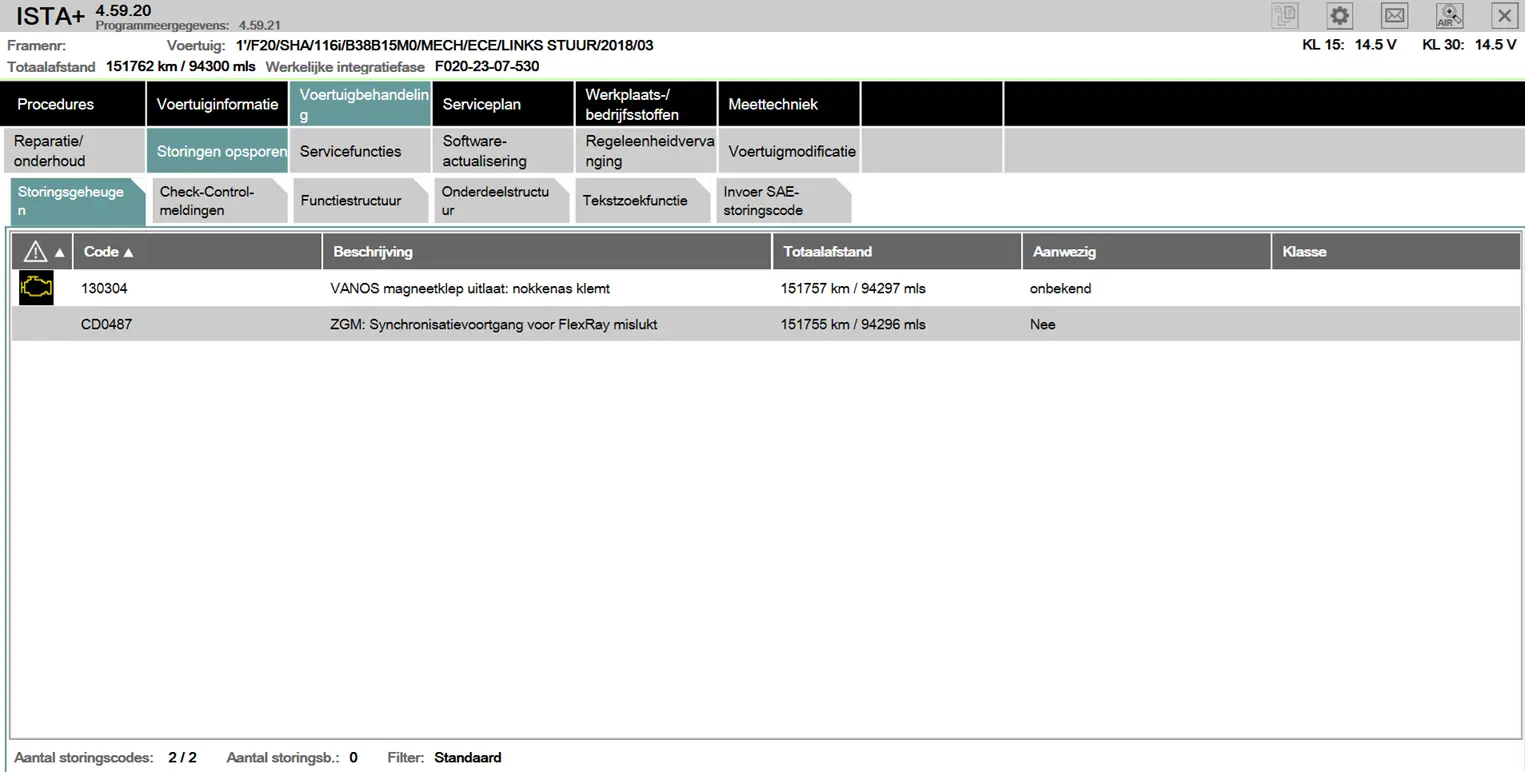
Among others, the following fault code was stored in our diagnostic software:
130304 – VANOS solenoid valve exhaust: camshaft sticking
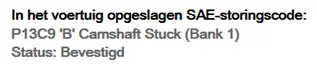
The general SAE code was also displayed:
P13C9 – “B” Camshaft Stuck, Bank 1
In plain language, that means the engine control unit notices that the camshaft adjustment is not responding as expected. The DME actuates the VANOS, but the actual position of the camshaft does not follow correctly, or gets stuck.
What does VANOS do on a BMW B38 engine?
The B38 is a modern three-cylinder gasoline engine from BMW. This engine uses variable camshaft timing on the intake and exhaust camshaft. That system continuously adjusts the timing of the camshafts, depending on load, engine speed, temperature and driving conditions.
A properly working VANOS provides, among other things:
- better pulling power at low revs,
- lower fuel consumption,
- lower emissions,
- smoother idling,
- and better performance across the entire rev range
When the VANOS does not work correctly, the engine control unit can no longer regulate the camshaft timing accurately. That can lead to fault codes, limp mode, irregular running, loss of power or faults that mainly return after a test drive.
The complaint: fault on the exhaust camshaft
With this BMW, diagnosis made clear that the fault mainly concerned the exhaust camshaft. The diagnostic software showed fault code 130304, with the description that the VANOS solenoid valve on the exhaust side detects a sticking camshaft.
That does not automatically mean that only the solenoid valve itself is faulty. With this type of fault you have to look further than the fault code alone. Possible causes include:
- contamination or poor oil flow,
- a faulty VANOS control valve,
- a VANOS adjuster that is mechanically stiff,
- incorrect or shifted timing,
- wear in the camshaft adjuster,
- or a combination of several factors.
That is why it is important not to blindly replace one part, but to first carry out the diagnosis and mechanical check correctly.
Diagnosis: measure and check first, do not guess
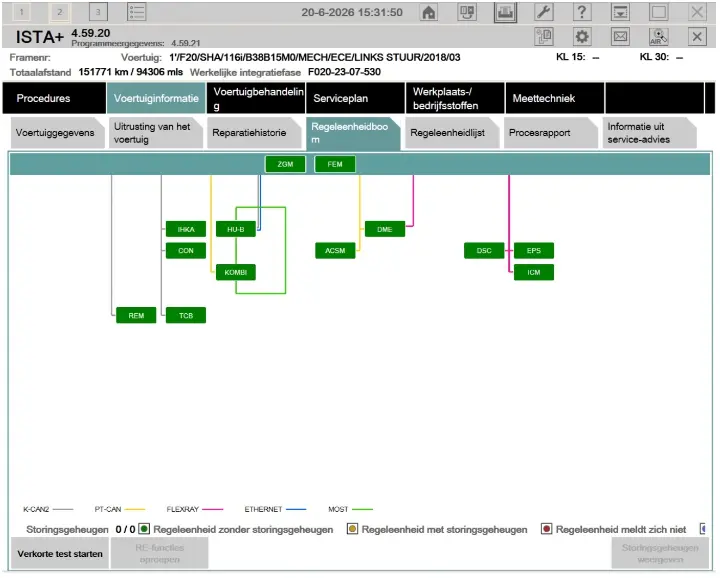
For this repair we read out the fault codes with ISTA and confirmed the complaint after a test drive. The fault did indeed return on the exhaust side. With the test plan we then verified that only the exhaust side is faulty and not the intake side, which almost completely rules out an overall timing problem such as a stretched timing chain. That is good news, because the price difference between replacing a VANOS and a complete timing chain job on the B38 is considerable.
In the video you can see how the camshaft adjustment is first checked on the intake side at various positions and runs through them without problems. On the exhaust side, however, it is constantly out of tolerance. Having it checked in time is therefore advisable to prevent engine damage.
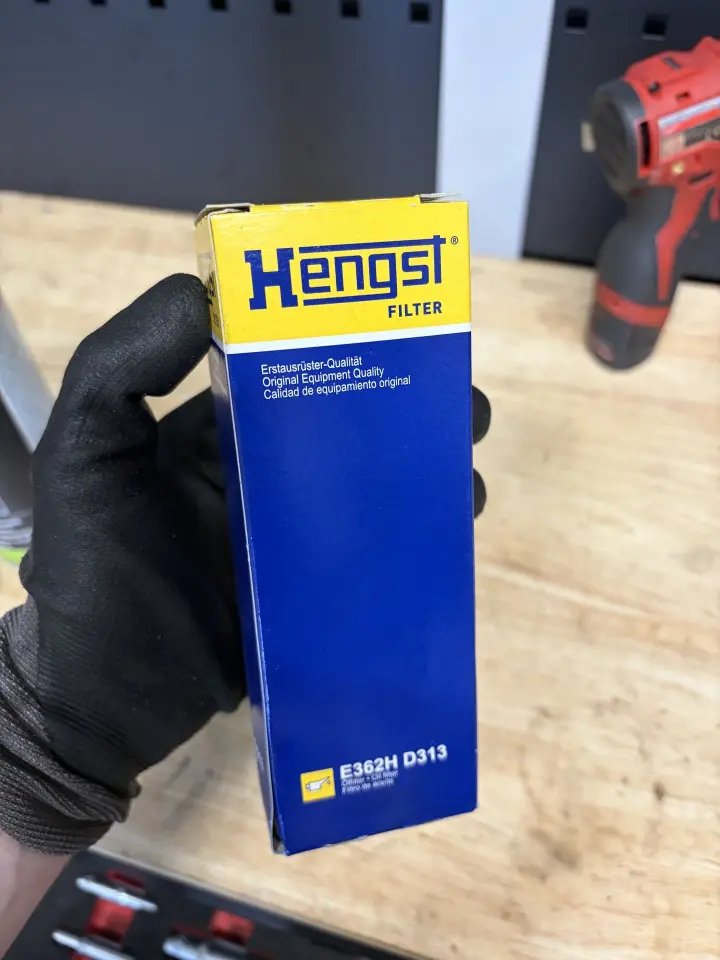
First the old oil filter was taken out of the filter housing and inspected. If we had found heavy contamination or metal swarf here, we would have decided, depending on the amount and nature of the contamination, whether an engine flush alone would be enough or whether further mechanical damage had to be looked for after all, possibly beyond the VANOS itself. In this case there was no dirt to be found in the filter, so the car simply got a new oil filter and oil.
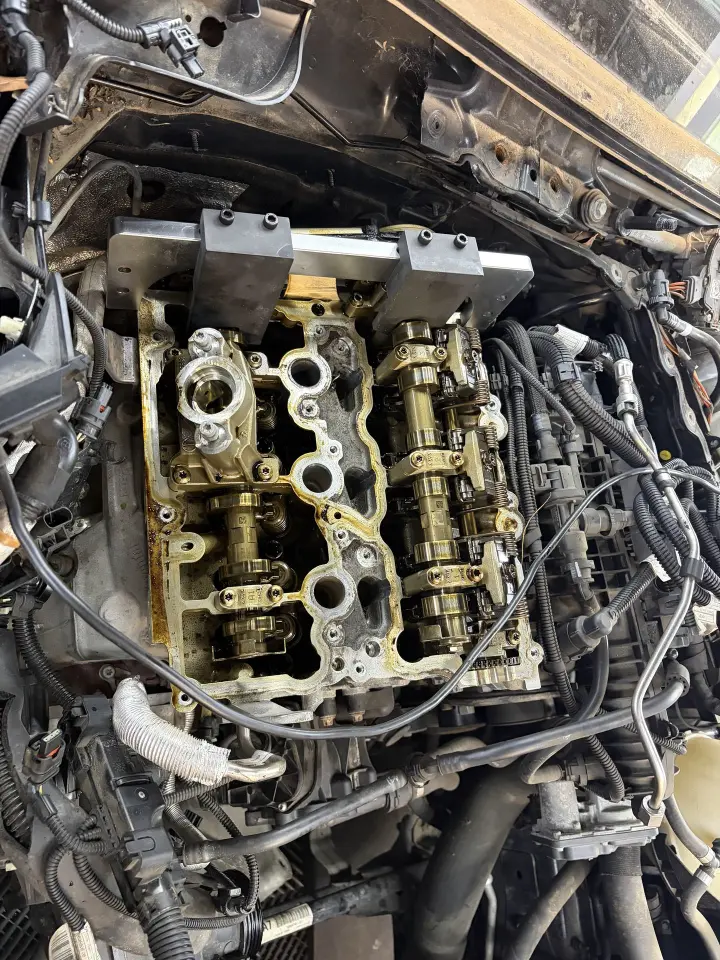
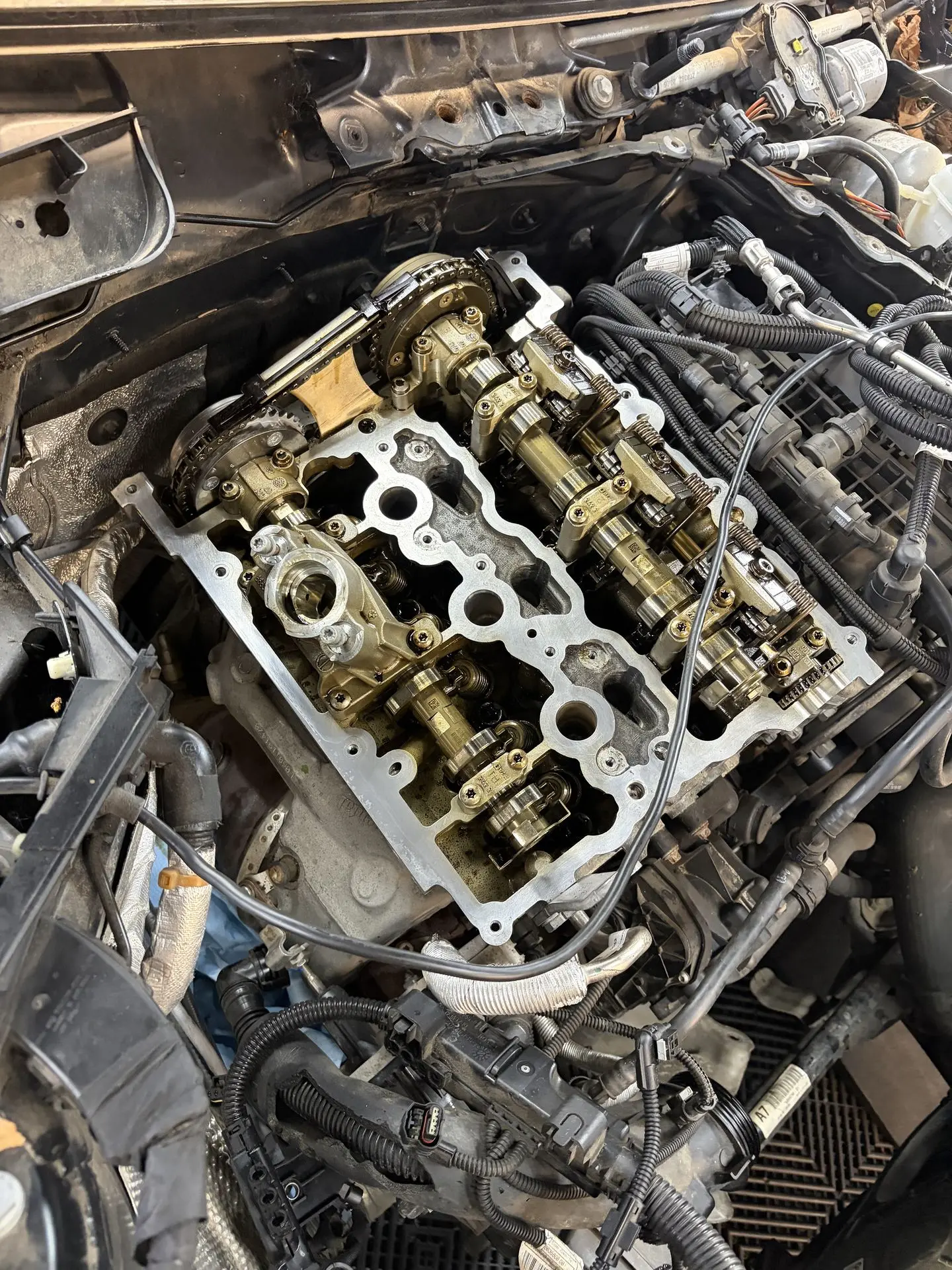
Then the engine was checked mechanically. The valve cover was removed and the camshafts were locked with the correct special tool. With VANOS or timing work on this engine, that is essential. The B38 is not an engine where you work on the timing “by feel”. The camshafts and crankshaft have to be correctly positioned and locked, otherwise the timing can be off, with all the consequences that entails.
The photos show that the camshafts were locked with the correct locking tool. That way the timing can be checked and the VANOS adjuster replaced safely. It also means we can say with certainty that there is no overall timing problem.
What did we replace?
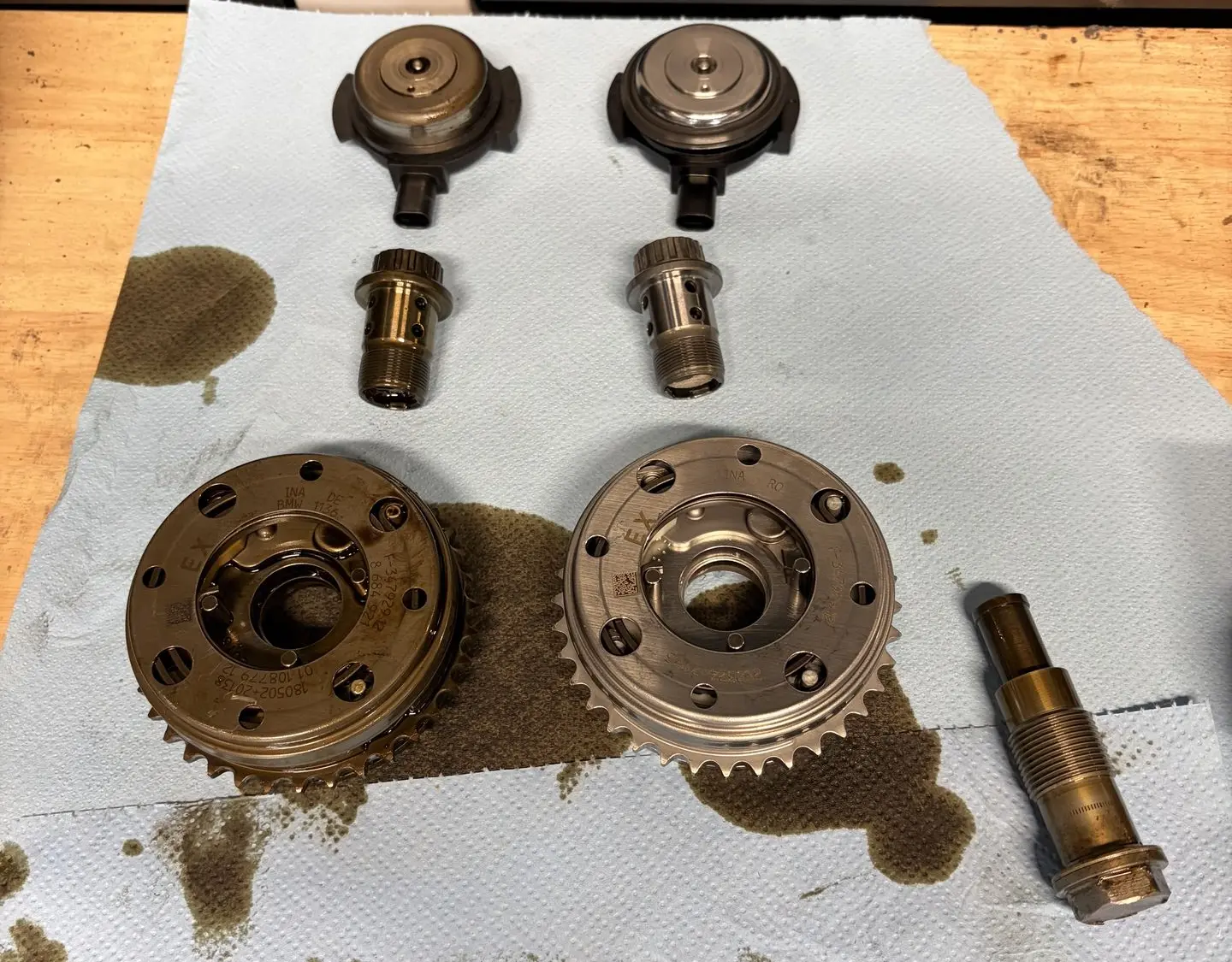
For this repair the VANOS components were removed and replaced. The exhaust-side VANOS consists of 3 parts: the plastic actuator that clicks onto the valve cover, the metal central VANOS valve bolt and the VANOS camshaft sprocket adjuster itself. What we usually see is that the plastic actuator ages and needs replacing, often around 150,000 km. However, when the actuator itself is faulty we tend to see a fully permanent fault in which the VANOS can no longer reach any degrees at all, and that was the case here.
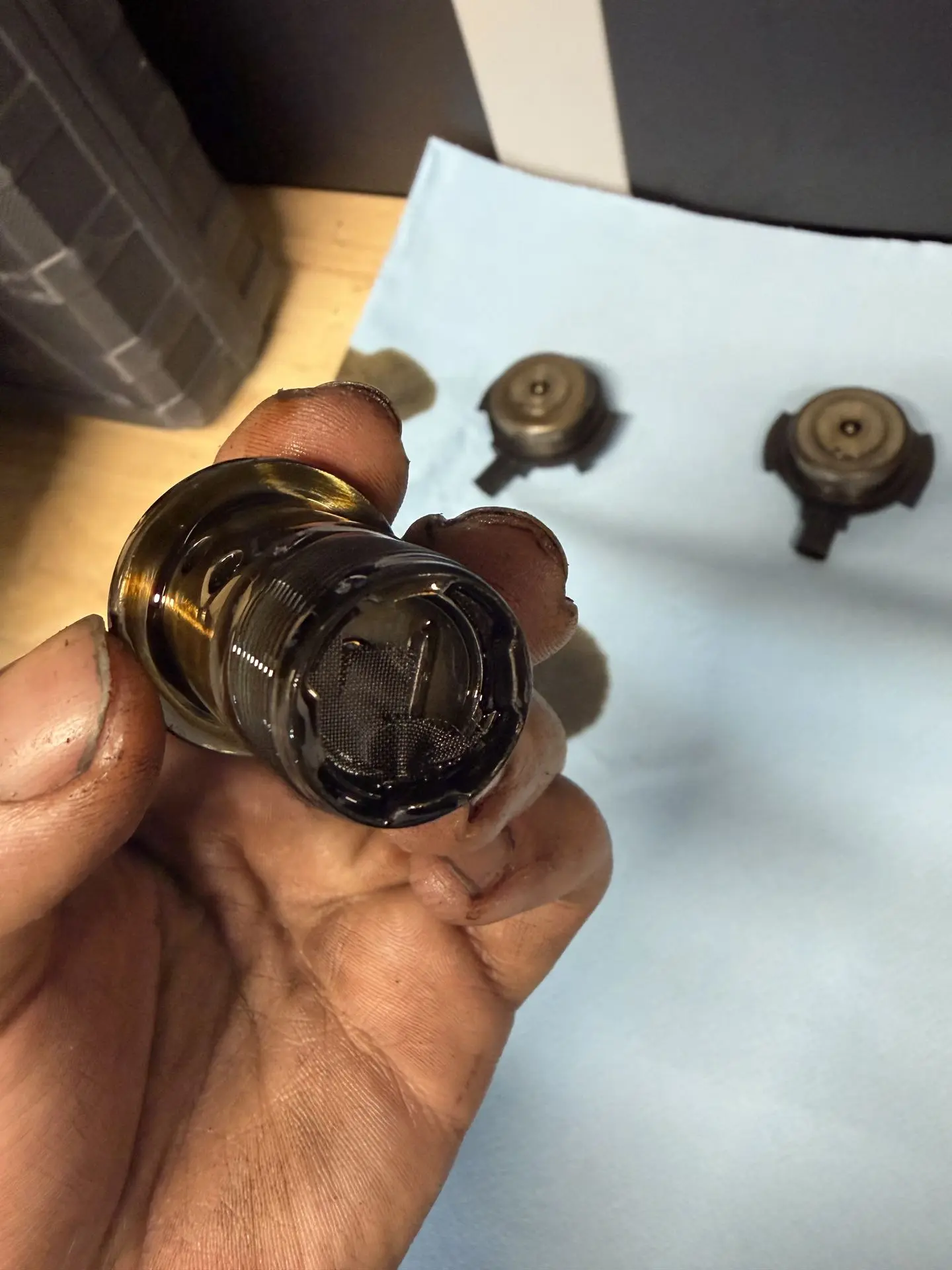
The second most common fault is contamination of or a defect in the central VANOS valve that holds the VANOS camshaft sprocket in the camshaft itself. Due to contamination, lack of oil pressure or a defect, it may sporadically go into fault or no longer always reach every degree of camshaft adjustment. That is what we saw happening here.
In a VANOS system, oil is not just lubrication. The oil pressure is also used to actuate the camshaft adjustment. That is why contaminated oil, a poor oil history or reduced oil flow can have a major impact on the operation of the system.
Once we had completely removed the VANOS from the exhaust side, we immediately noticed that the central valve was indeed cracked. For that reason we replaced both VANOS actuators, since they often fail at this mileage, as well as the central VANOS valve and the VANOS adjuster sprocket on the exhaust side. Since the intake side was functioning normally, we only replaced the actuator there.
Why just clearing the fault code is not a solution
A fault code such as P13C9 or 130304 can sometimes disappear temporarily after clearing the fault codes or resetting adaptations. But if the mechanical problem remains, the fault usually returns after a test drive.
That was the important point here too: the fault did not just have to be cleared, the cause had to be solved.
A VANOS that sticks or responds slowly cannot be “repaired” by software. The engine control unit can only try to compensate. When the difference between the requested and actual camshaft position becomes too large, a fault code is stored again. In addition, poor camshaft adjustment can cause major engine damage if it is not dealt with.
Correct installation is crucial
After replacing the VANOS components, everything was correctly refitted according to the proper procedure. With this kind of work a few points are very important:
locking the crankshaft and camshafts correctly,
positioning the VANOS adjusters correctly,
checking the chain and timing,
tightening the bolts according to the prescribed procedure,
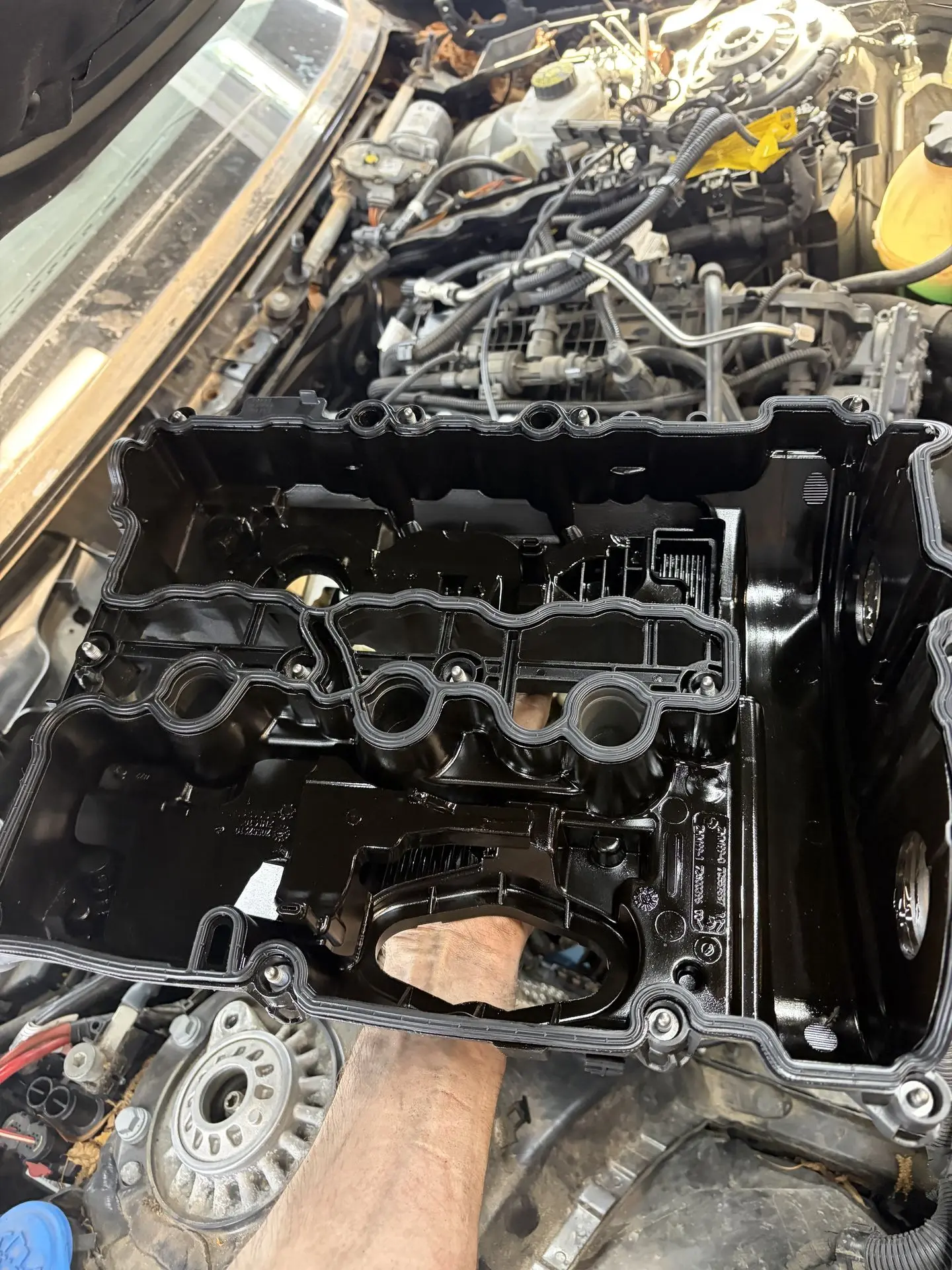
cleaning the cylinder head and fitting the valve cover with the correct seal, tightened according to procedure,
refitting the injectors and tightening them according to procedure,
and afterwards carrying out the adaptations and test procedures correctly.
A small mistake in timing or installation can cause the car to run worse than before the repair, or cause fault codes to appear again.
That is why this is not a repair we recommend doing “quickly” without the right tools and the right diagnostic equipment. This job also requires quite a lot of special, BMW-specific tooling.
Result after the repair
After installation the engine was reassembled and checked. The fault codes were cleared, adaptations were reset and operation was tested again. With this kind of repair a test drive is important, because VANOS faults often only return when the engine is used under different loads and engine speeds.
The aim is not just that the check engine light stays off at idle, but that the camshaft adjustment also works correctly and stably while driving.
Can you keep driving with a VANOS fault?
That depends on the exact fault, but it is usually not a good idea to ignore it for long. We have already seen a car driven for a long time with a VANOS fault code, which resulted in 2 damaged valves.
A VANOS fault can cause the engine to run less smoothly, deliver less power or go into limp mode. In some cases the problem is purely a control issue, but in other cases mechanical resistance, wear or a timing problem can also play a part.
Especially with fault codes such as P13C9 “Camshaft Stuck” or 130304 VANOS camshaft sticking it is wise to have the cause checked. The word “stuck” or “sticking” does not mean that the camshaft is literally seized solid, but that the control is not moving as the engine control unit expects.
Our advice for B38 VANOS problems
When a BMW or MINI with the B38 engine has a VANOS fault, at BimmerStore we do not look only at the fault code. We also check the mechanical timing, the condition of the oil-controlled components and the general maintenance condition of the engine.
Especially on engines with higher mileages it is important to look beyond just the sensor or solenoid valve. A VANOS system works closely together with the timing drive, oil pressure, camshaft sensors and engine control unit. So one fault code can have several possible causes.
That is why we carry out this diagnosis step by step with BMW diagnostic equipment and the right special tools.
Does your BMW or MINI have a VANOS fault?
Do you have a BMW or MINI with the B38 engine and are you getting fault codes such as:
P13C9 – Camshaft Stuck
130304 – VANOS solenoid valve exhaust: camshaft sticking
130308 / 130F20 / 130E20 or similar camshaft or VANOS faults
Then we can check and repair this for you.
At BimmerStore we specialize in BMW and MINI diagnostics, maintenance and repairs. We use BMW diagnostic equipment, specialized tools and quality parts to carry out the repair correctly.
Feel free to contact us for a diagnosis or price indication.
Frequently asked questions
Is a VANOS fault always a faulty solenoid valve?
No. A faulty solenoid valve is possible, but not the only cause. Contamination, oil pressure problems, a faulty VANOS adjuster, incorrect timing or mechanical wear can also play a role.
Can bad oil cause a VANOS problem?
Yes, it can. VANOS works with oil pressure. If the oil is contaminated, has been used for too long or does not meet the right specification, that can affect the operation of the control valves and camshaft adjusters. That does not mean oil is always the only cause, but it is an important factor.
Does the timing chain also have to be replaced during a VANOS repair?
Not always. That depends on the mileage, the condition of the chain, the fault codes and what is found during disassembly. Because the VANOS and timing drive are close together, it can sometimes be worthwhile to combine certain jobs, but that has to be assessed per vehicle.
Can you simply clear a P13C9 fault code?
You can clear the fault code, but if the cause has not been solved, the fault usually returns. Especially when the fault comes back after a test drive, further diagnosis is needed.
Do you also work on MINIs with the B38 engine?
Yes. The B38 engine is also used in various MINI models. We can also diagnose and repair VANOS problems on MINIs with this engine.
BimmerStore is an independent BMW and MINI specialist in Herenthout (province of Antwerp, Belgium). We carry out repairs on BMW and MINI in our own workshop, by appointment.
BMW B38 VANOS 130304 or P13C9