
Case study: MINI One 1.6 with fault code 287D – why a blown head gasket is a consequence, not a cause
When a check engine light comes on, many drivers think they can keep driving for a while. This example of a MINI One 1.6 gasoline N13 (55 kW) shows what can really happen if you ignore fault codes and keep driving for hundreds of kilometers.
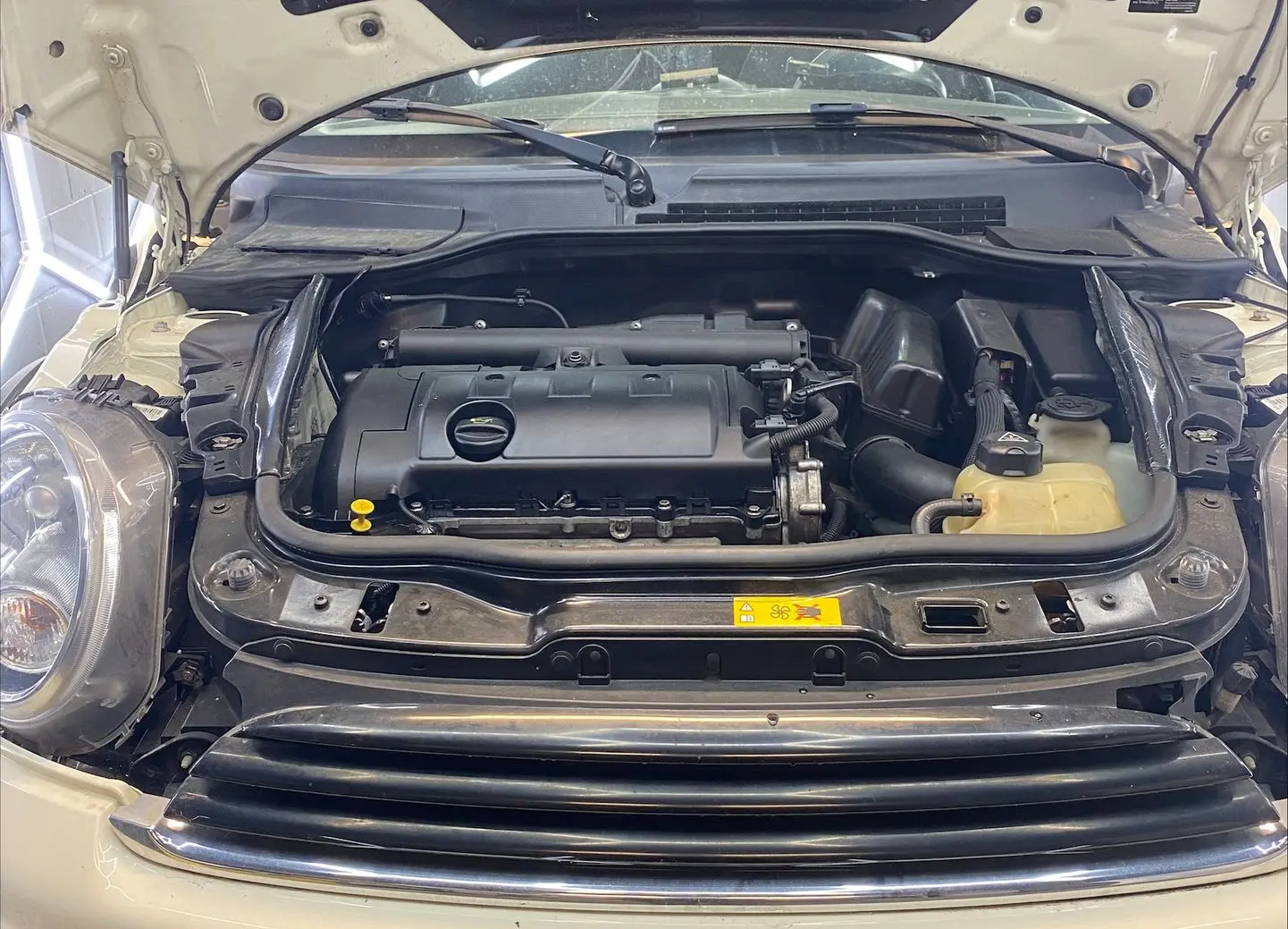
The first fault code: 287D – VANOS intake actuator
Fault code 287D means on this engine that the VANOS actuator on the intake side is no longer working correctly.
- As a result, the ECU can no longer regulate the valve timing properly.
- The engine runs irregularly, has less power and burns at higher temperatures.
- Important detail: as standard, this MINI engine already runs at around 110 °C, where other engines average around 90 °C. So the margin for driving safely is smaller.
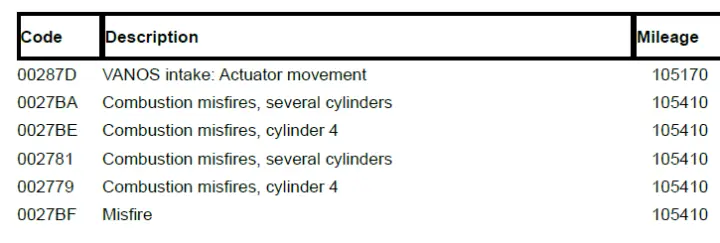
What the driver did
Instead of having the fault checked right away, the driver kept driving for hundreds of kilometers with the light on.
- The engine ran worse and hotter.
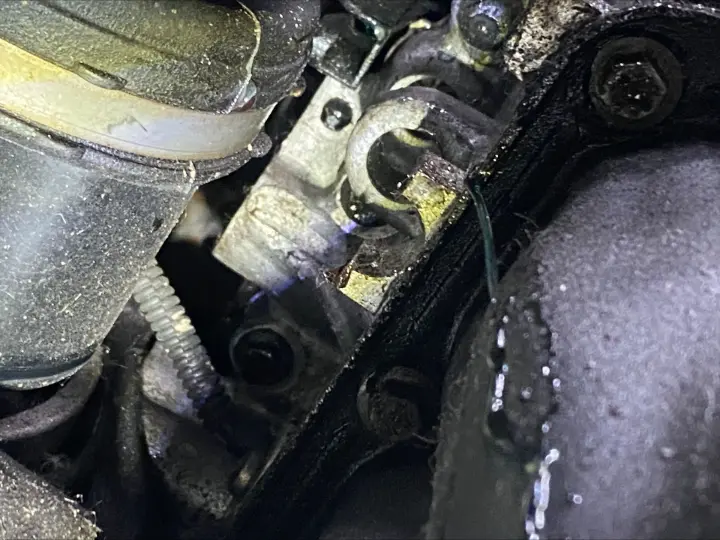
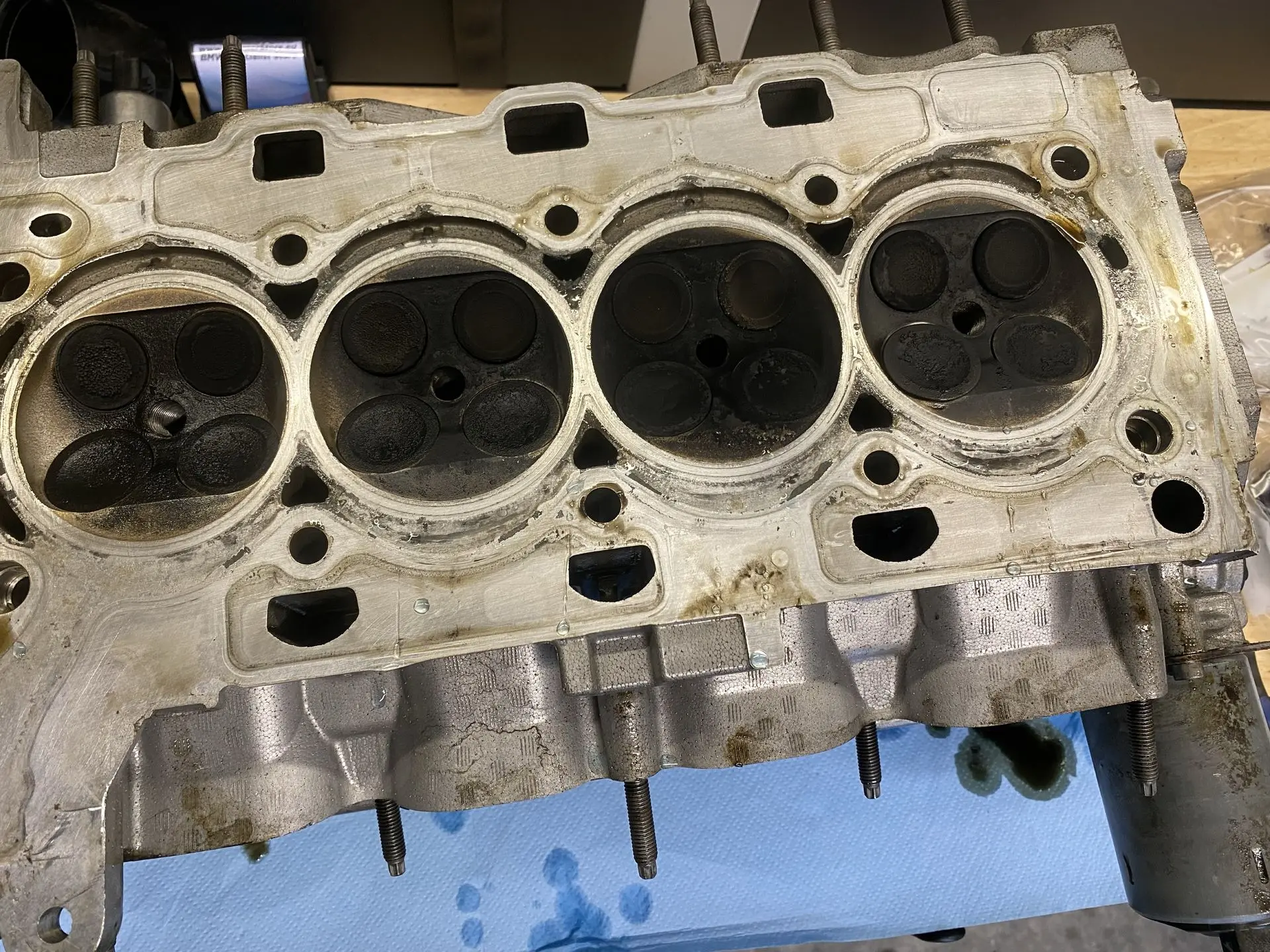
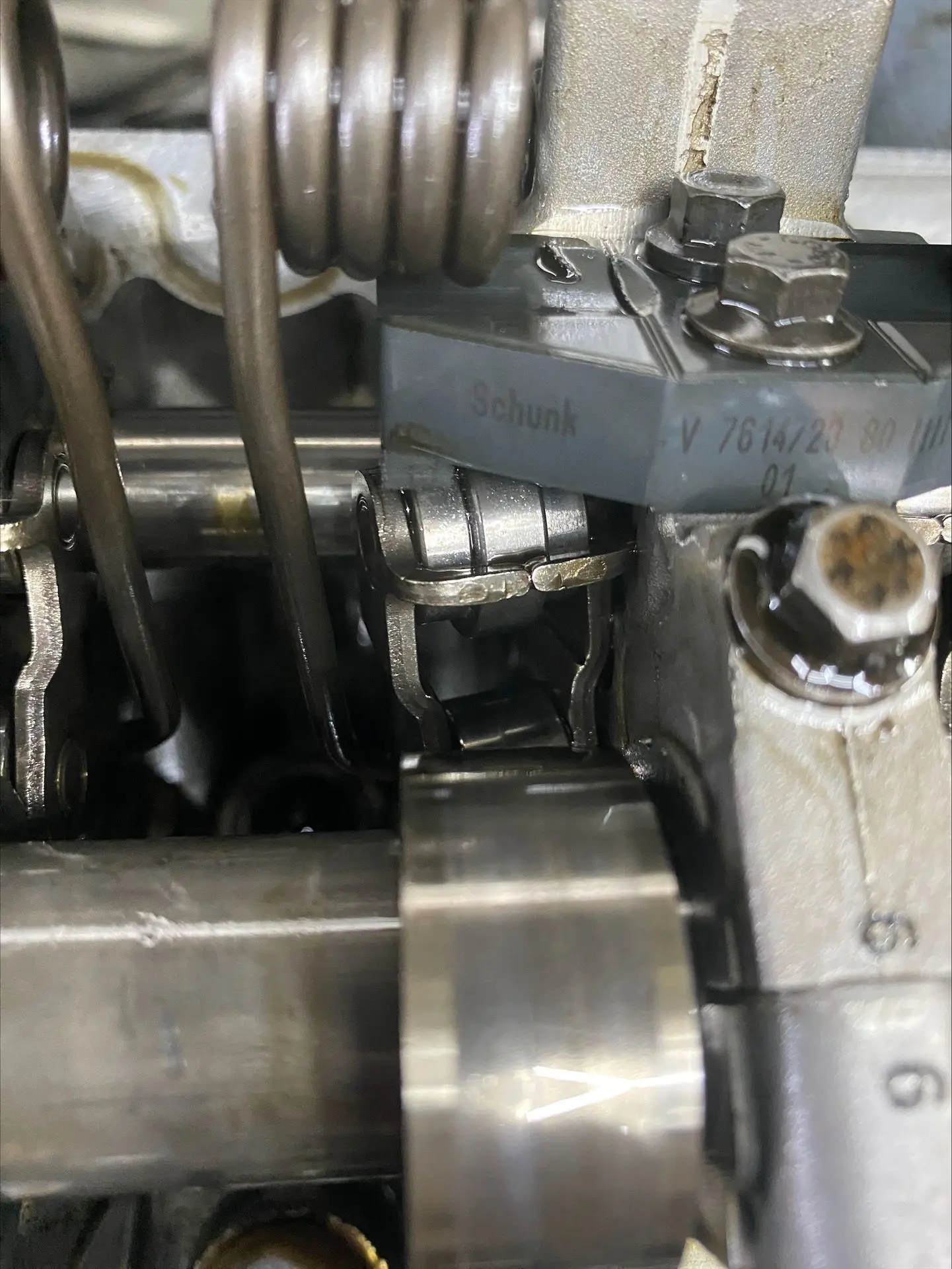
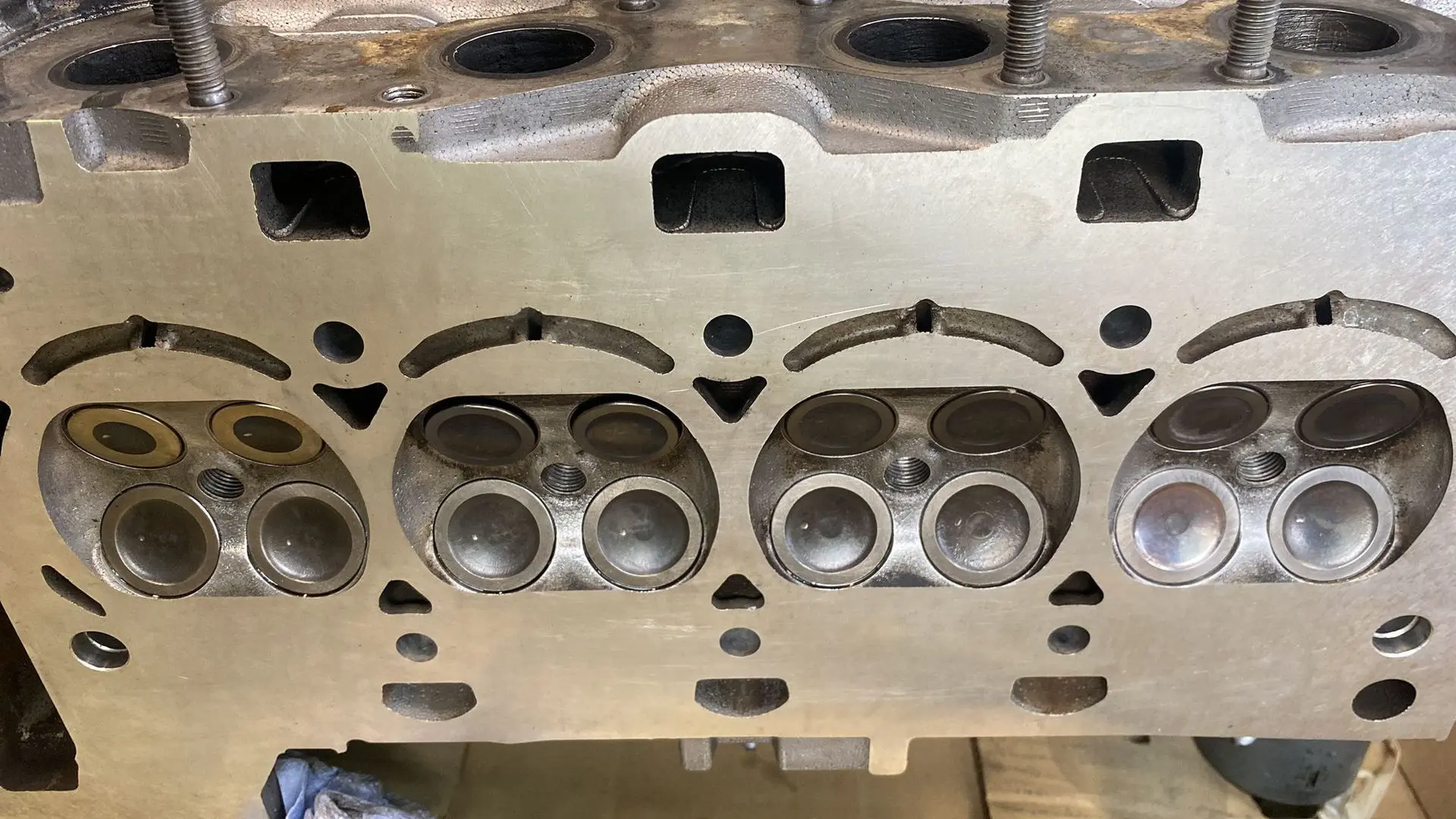
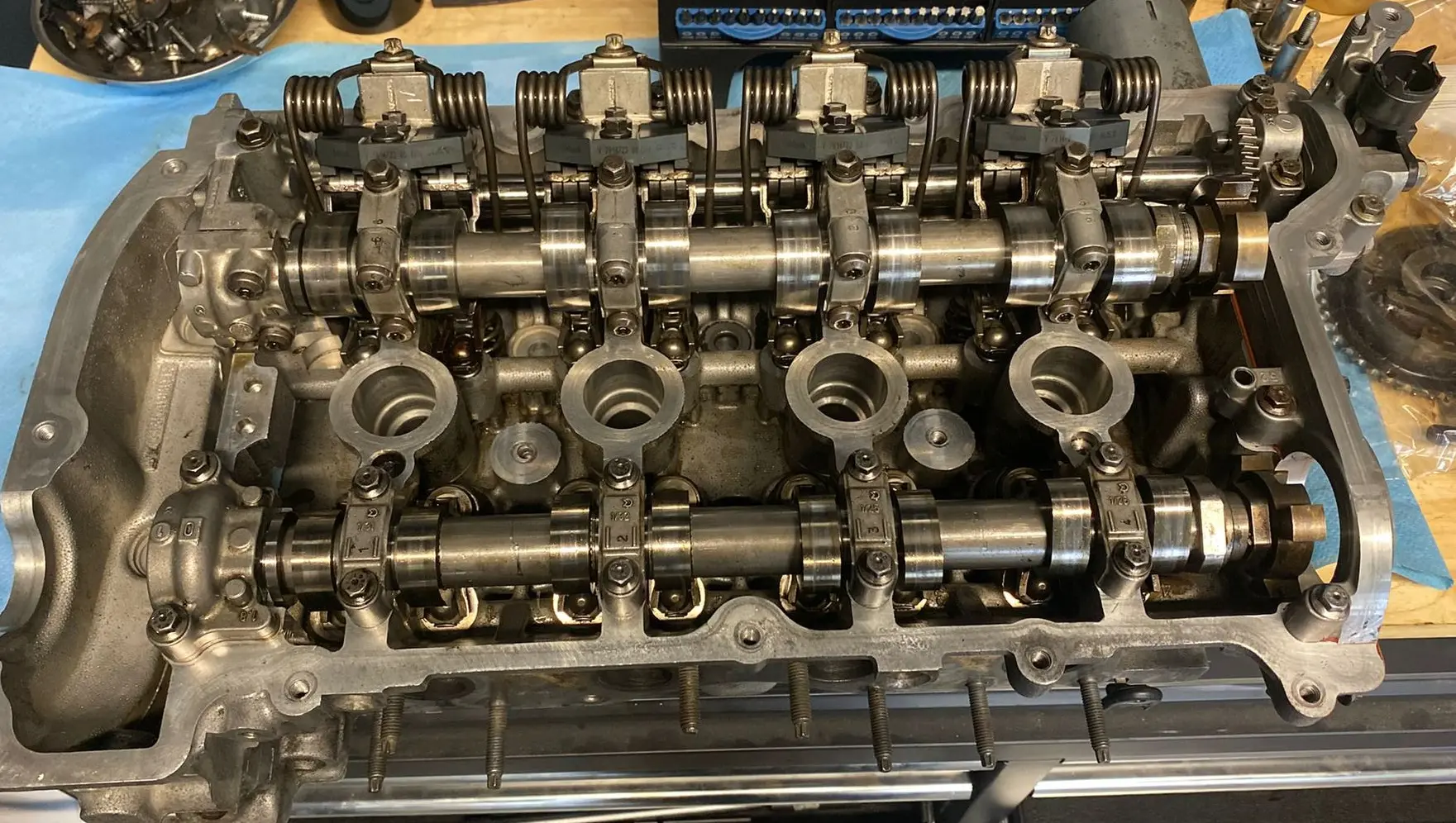
- Eventually the valve and valve spring of cylinder 4 were damaged. In the photos of the cylinder head you can clearly see a valve spring sitting crooked – a sign that the valve itself is bent or has been struck.
- Because of this loss of compression and the increased temperature, the water pump also took a beating, resulting in coolant loss.
- Yet the car was driven further, until the engine refused to start altogether. And it had no compression left on cylinder 4.

What we saw during disassembly
1. The head gasket
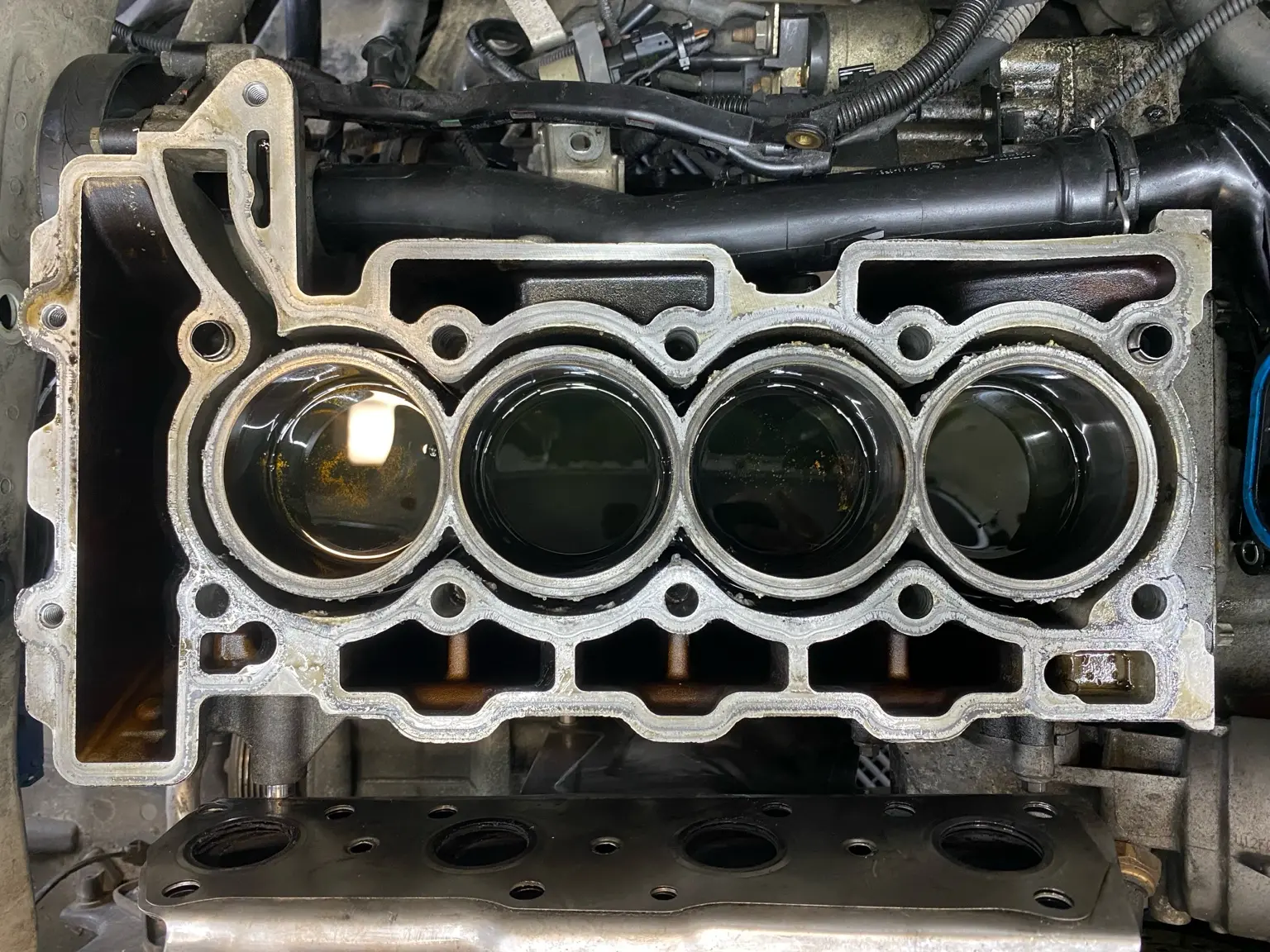
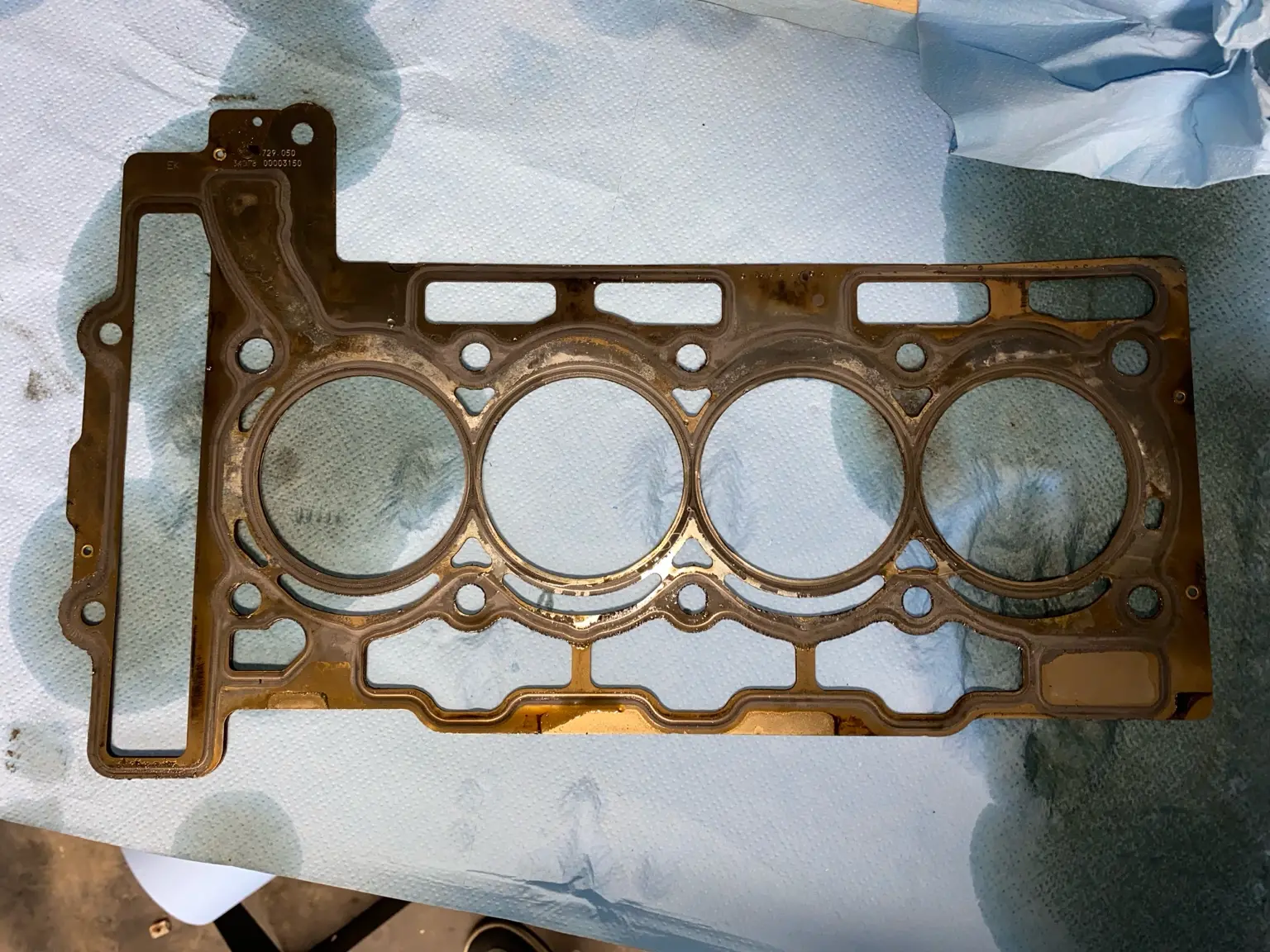
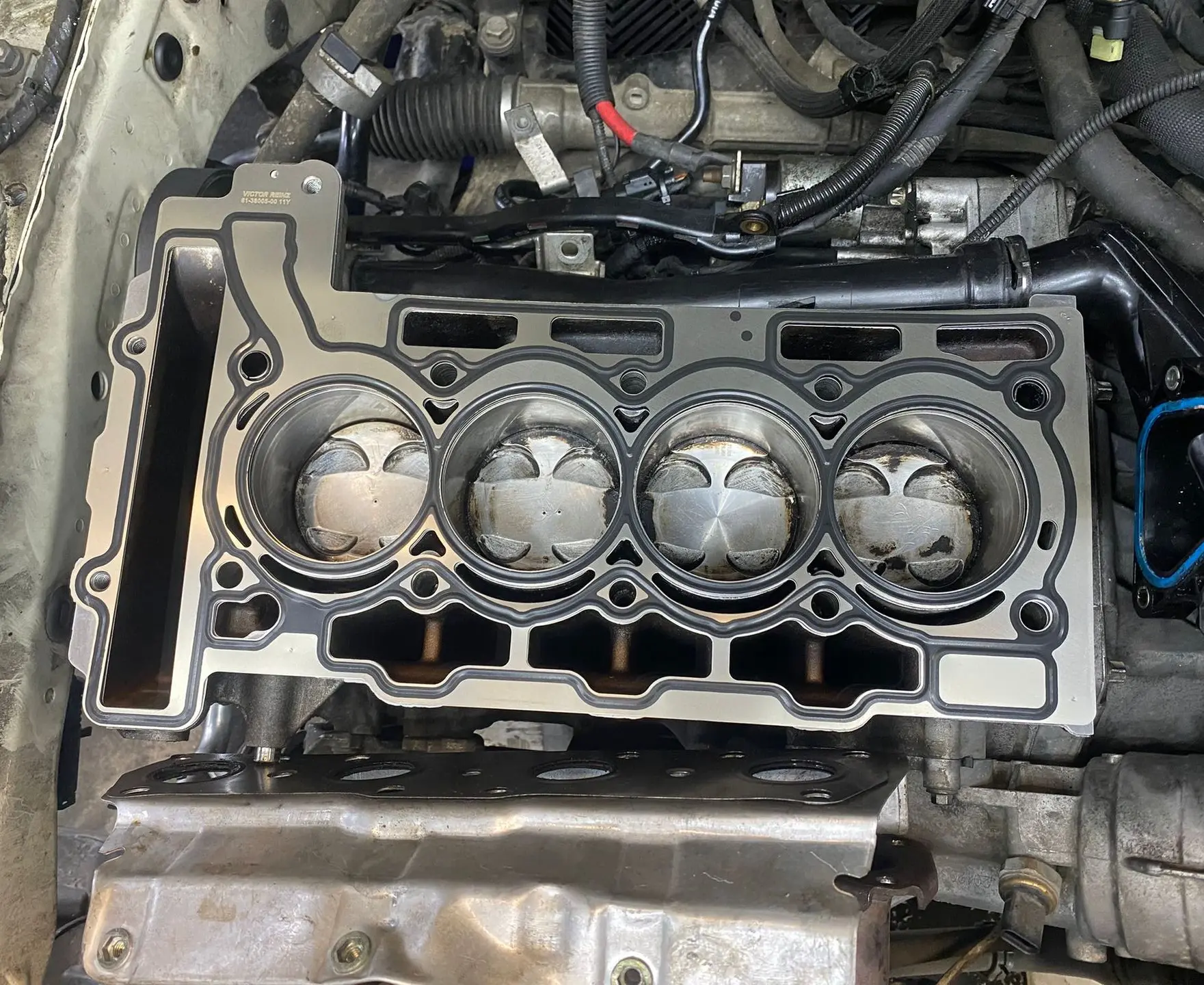
The photos of the head gasket clearly show that it has burned through here:
- The edges around the cylinders show discoloration and black marks.
- In several places there is leakage toward the coolant passages.
Important: a head gasket that burns through in this way is always the result of overheating or a secondary problem. It is almost never the initial cause.
2. The cylinders and pistons
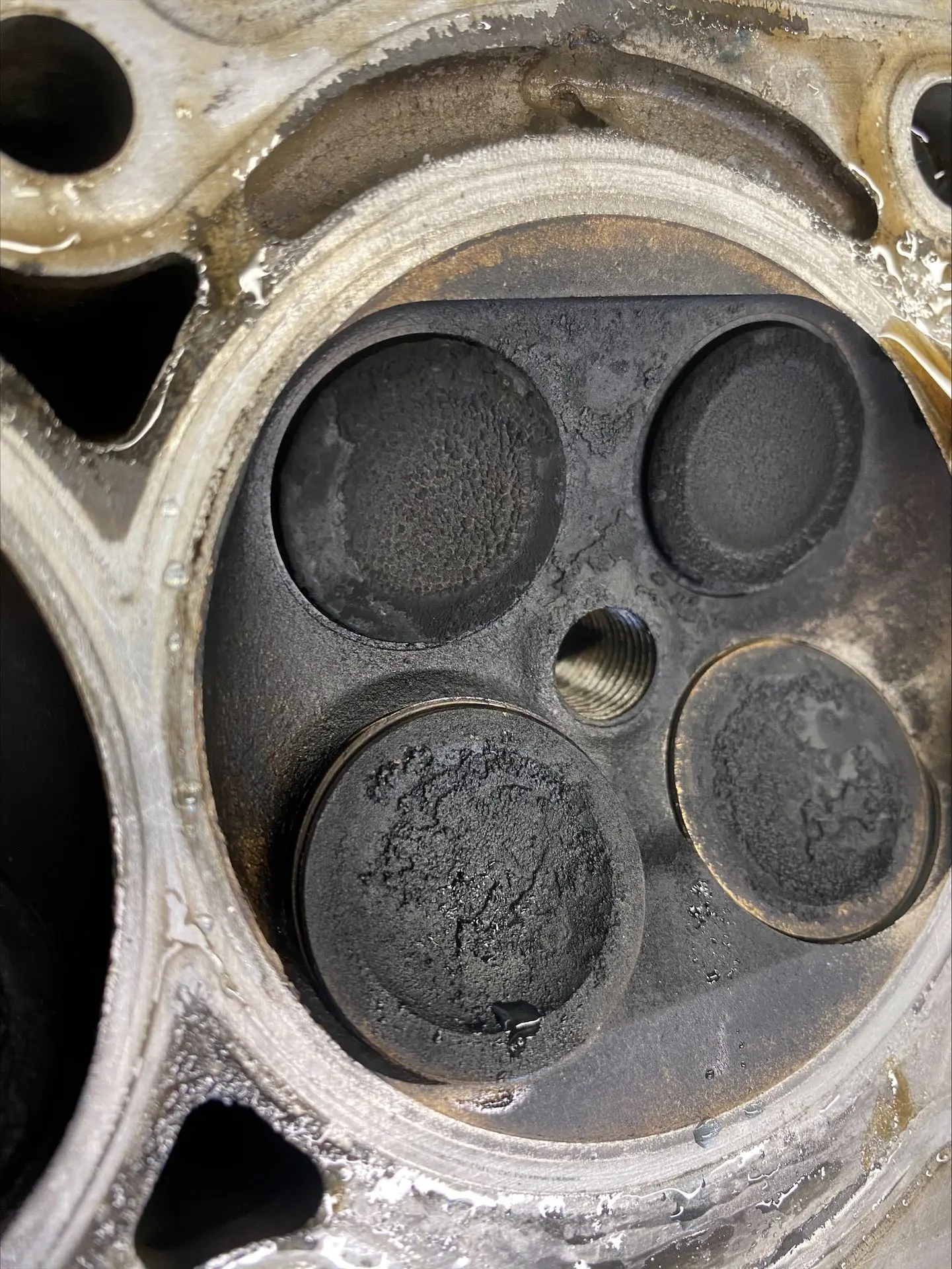
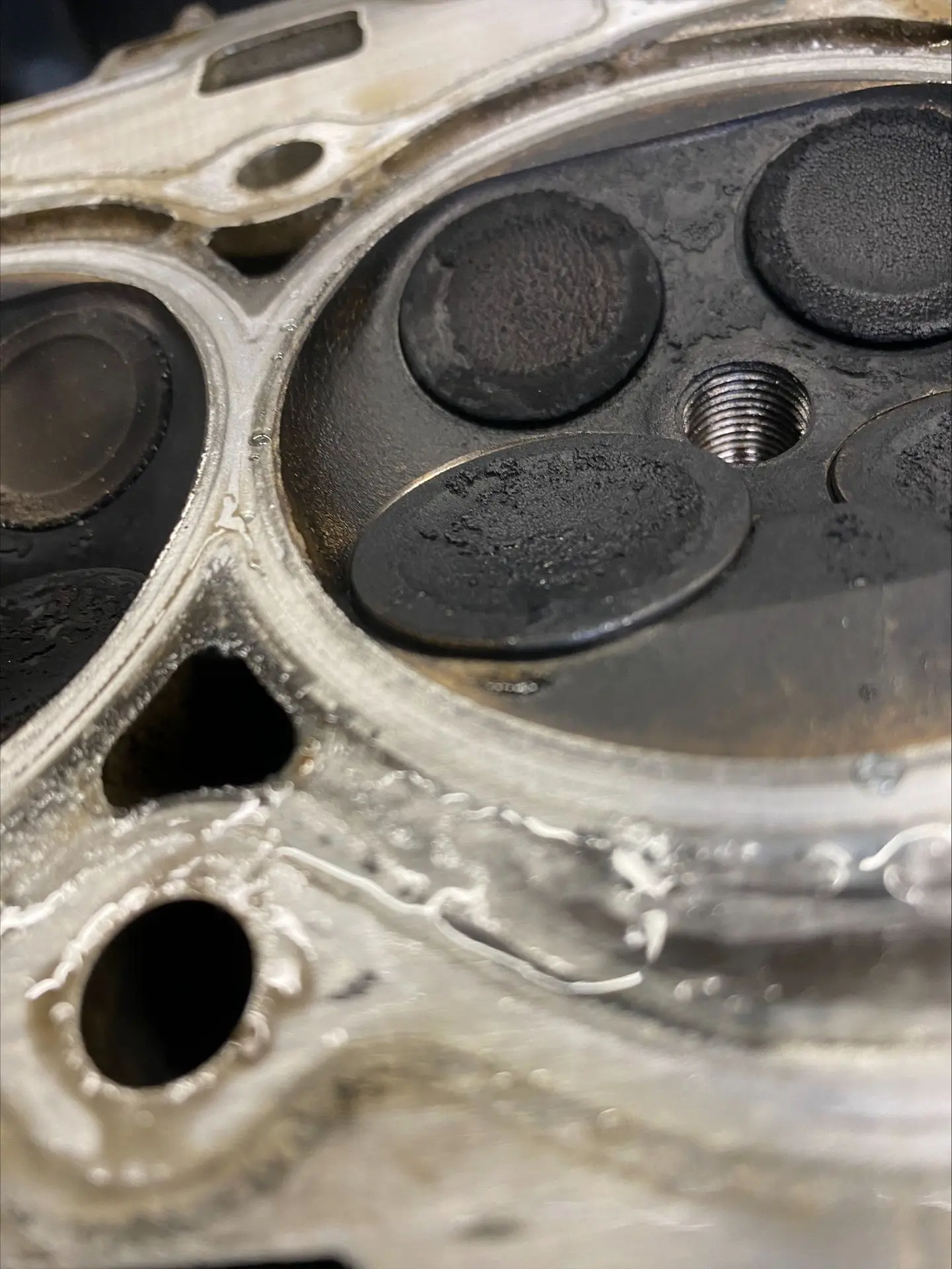
- On the pistons we see light traces of detonation (knocking) and soot deposits.
- Cylinder 4 differs from the other three, in line with the damaged valve.
- There are no holes or deep scratches to be seen – so no mechanical catastrophe of the piston rings.
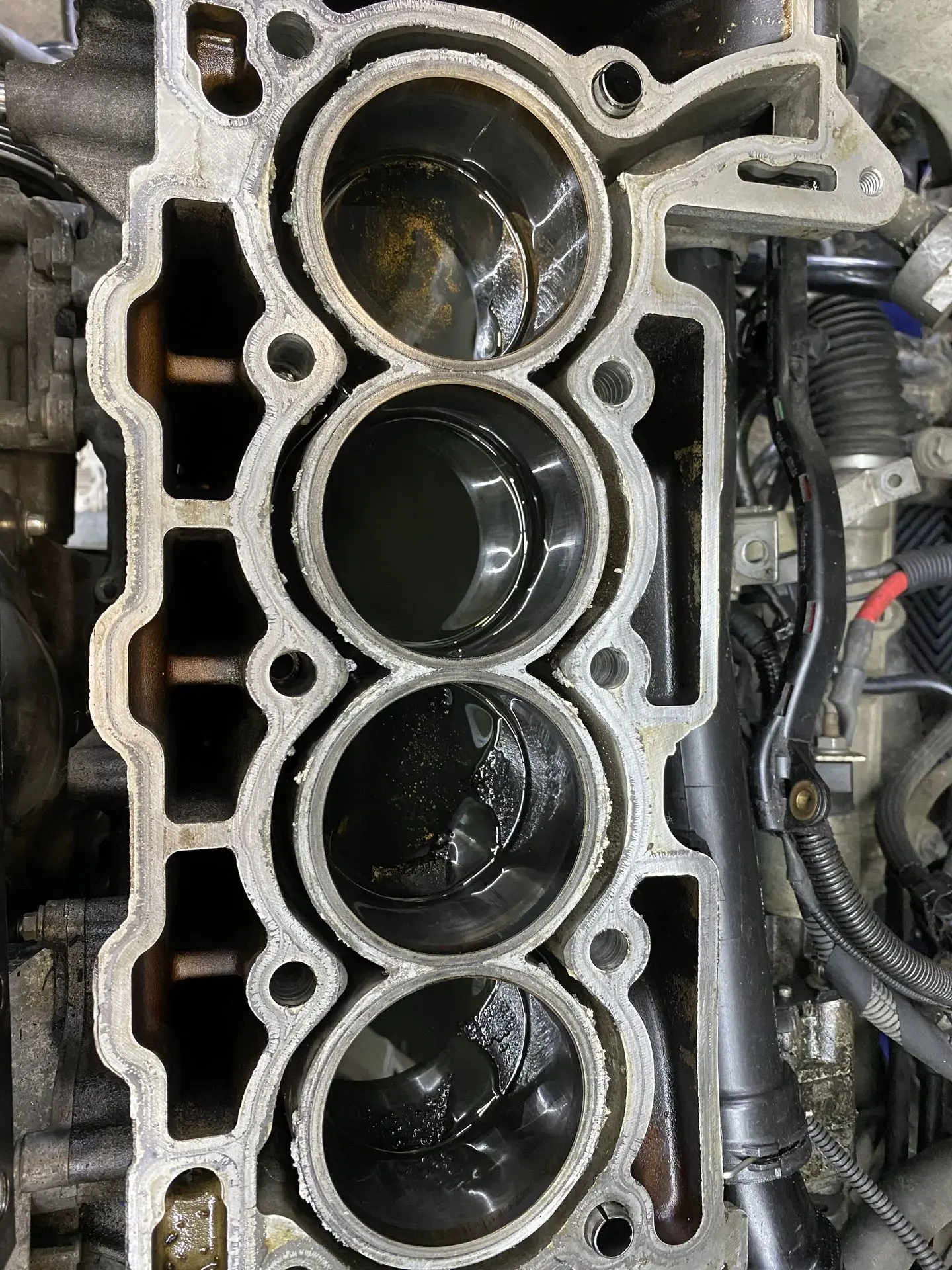
We also carried out an oil test by pouring a little oil into the cylinders. After 12 hours there was still oil in all cylinders. This proves that the piston rings still seal and are therefore not responsible for the oil loss or loss of compression.
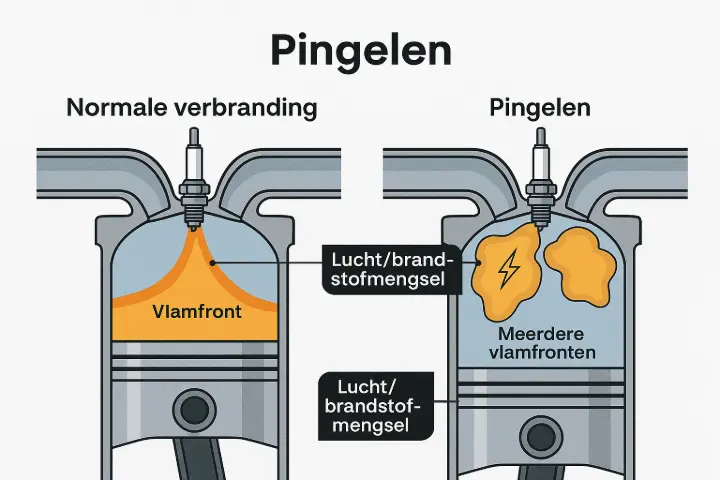
Knocking (also referred to as detonation or pinging by some) is an uncontrolled combustion in the cylinder.
Normally combustion proceeds like this:
- The spark plug ignites the air/fuel mixture.
- The flame front spreads gradually through the cylinder.
- The pressure in the cylinder rises evenly.
With knocking it goes wrong:
- Due to excessive temperature or incorrect ignition timing part of the mixture ignites spontaneously and too early.
- This creates multiple flame fronts that collide with each other.
- This produces a metallic “pinging” sound (hence the name).
Why is knocking dangerous?
- It causes extremely high peak pressures in the cylinder.
- That leads to pitting and damage on the piston crown.
- Valves, spark plugs and even the head gasket can also be damaged.
- In the long term → engine damage such as bent valves or burnt pistons.
Causes of knocking
- Excessive combustion temperature (e.g. due to poor cooling, incorrect valve timing or a lean mixture).
- Incorrect ignition timing.
- Poor or too low fuel quality.
- Carbon deposits in the cylinder that form hot spots.
3. The cylinder head and valves
- Besides the burnt-through gasket, physical damage is visible on the valve and spring of cylinder 4.
- This confirms that the engine ran too hot for a long time and that the valve is deformed.
4. The water pump
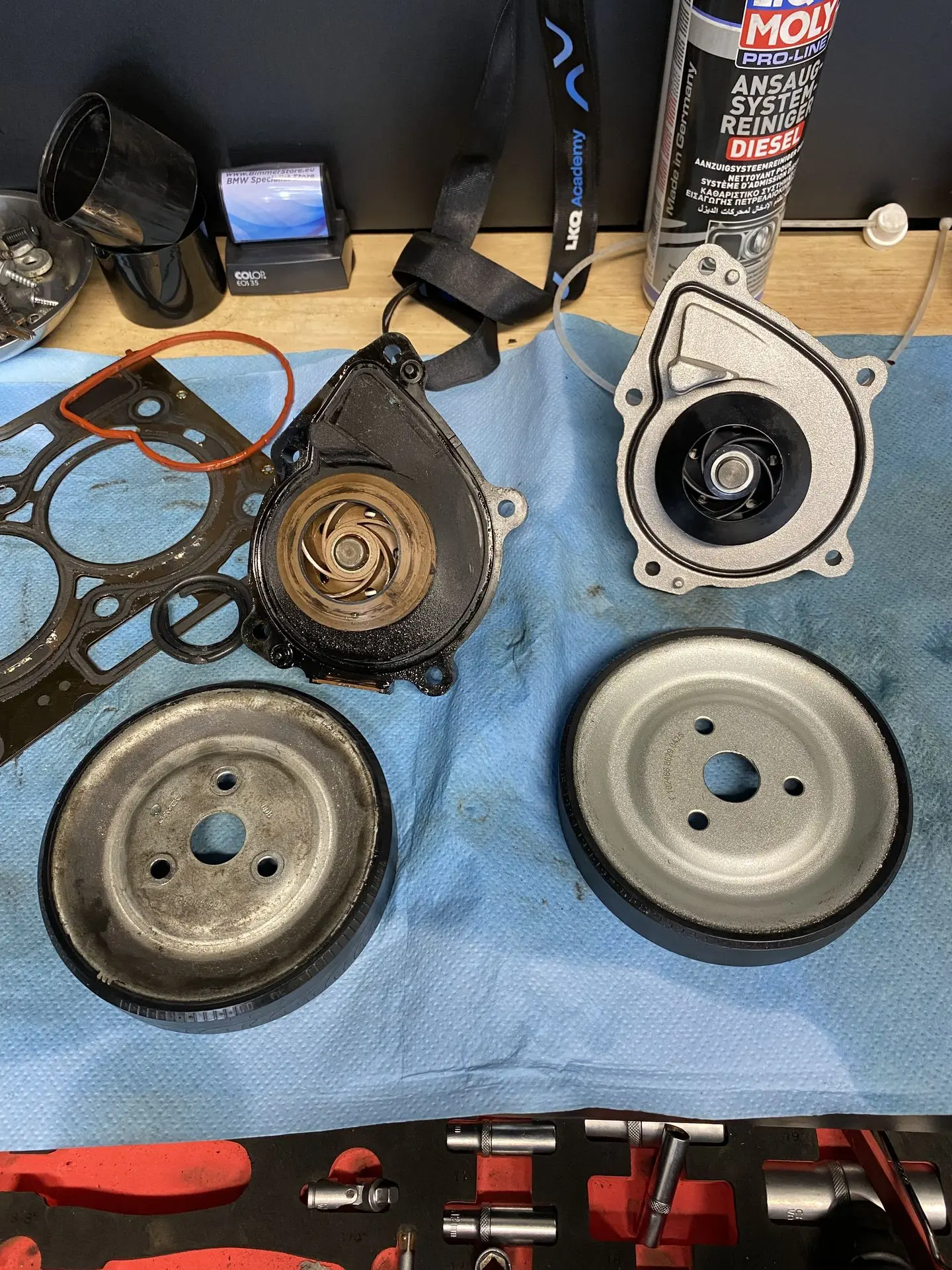
On inspection the water pump also turned out to be faulty and leaking. This explains the complete loss of coolant and why the engine eventually would not start anymore.
Why this is a consequence and not a cause
Some claim that a head gasket can fail “just like that” and is the cause of everything. But the photos and the timeline of this case clearly show the opposite:
- Initial cause: faulty VANOS actuator → fault code 287D → incorrect valve timing → engine runs hotter.
- Aggravation: driver continues for hundreds of kilometers → valve on cylinder 4 gets damaged → temperature rises even more.
- Cooling system gives way: water pump starts leaking → coolant loss.
- Consequential damage: head gasket burns through → cylinders lose compression, coolant and gases mix, engine fails.
👉 So the head gasket is the consequence of continuing to drive with a fault code + coolant loss, not the cause.

What this says about the engine's history
- This damage cannot have been present for thousands of kilometers already. A head gasket in this condition would have led to heavy smoking, coolant loss and starting problems much sooner.
- The chain of damage arose in the last few hundred kilometers in which the car was driven on with a fault code and without coolant.
- The oil in the connector of the VANOS solenoid confirms that the problem started at the actuator. The fact that the VANOS fault was registered earlier than the other fault codes confirms this further.
What customers should take away from this
- Never ignore a yellow check engine light. It may be something small (an actuator or sensor), but driving on can lead to an engine rebuild.
- Check coolant loss immediately. Without coolant, any modern engine is seriously damaged within minutes.
- Acting in time saves thousands of euros. In this case replacing the VANOS solenoid and possibly the water pump would have cost a few hundred euros. Now it is an overhaul of the cylinder head, new gaskets, water pump, actuator, timing kit, ... – this now amounts to at least 5 times as much!
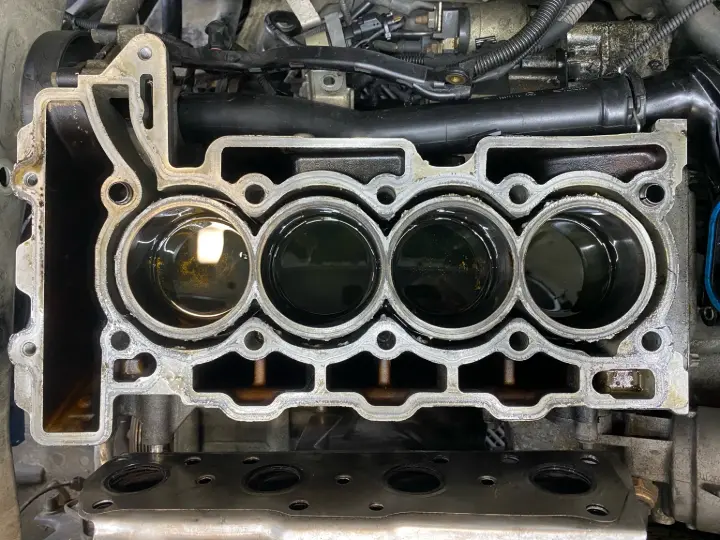
Photos – what do you see here as a customer?
- Cylinder head: valve spring pulled crooked → indicates a bent valve.
- Head gasket: burnt and black areas → burned through due to overheating.
- Cylinders: traces of overheating and deposits in cylinder 4.
- Oil test: oil stays put → piston rings still OK.
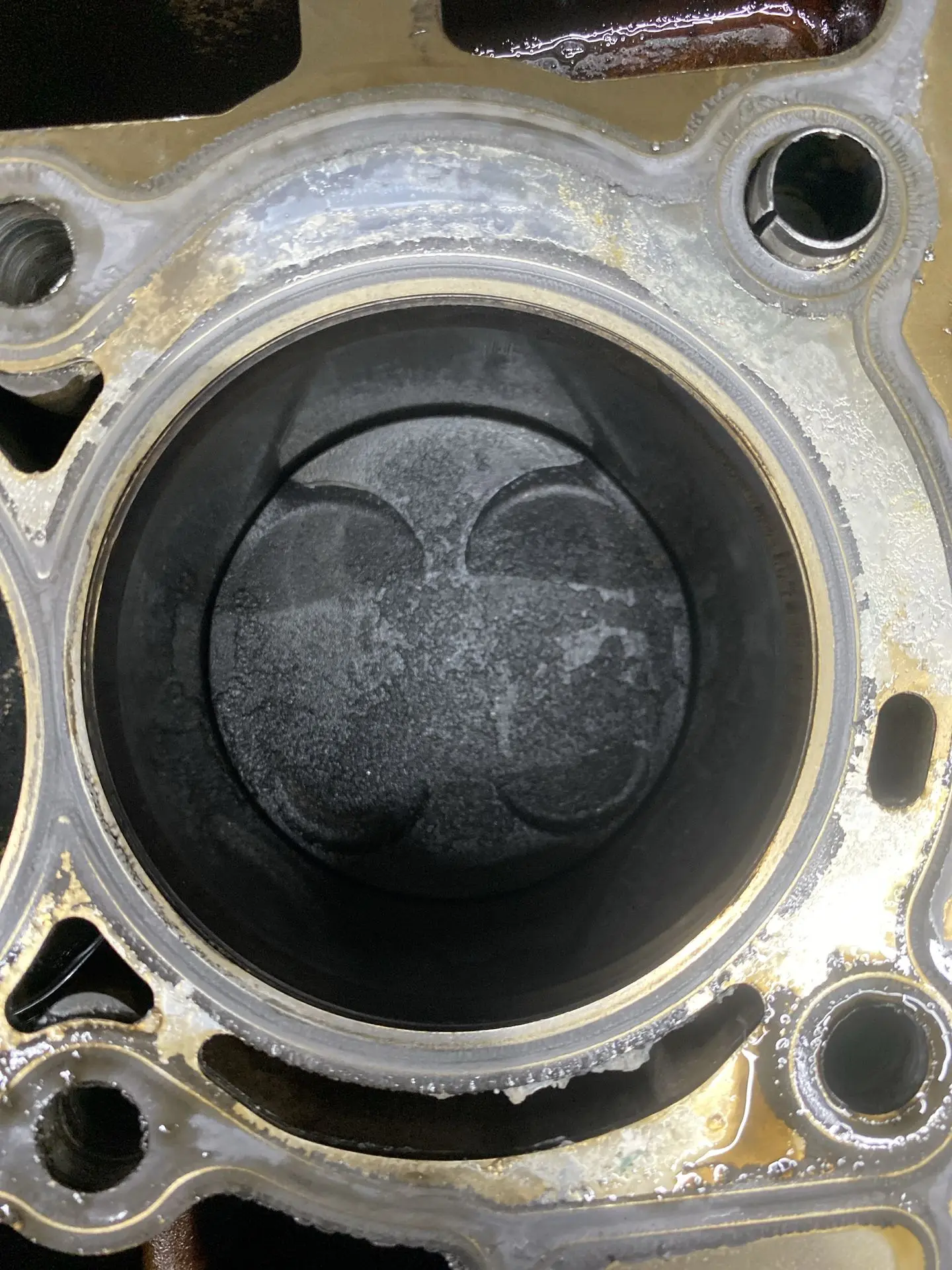
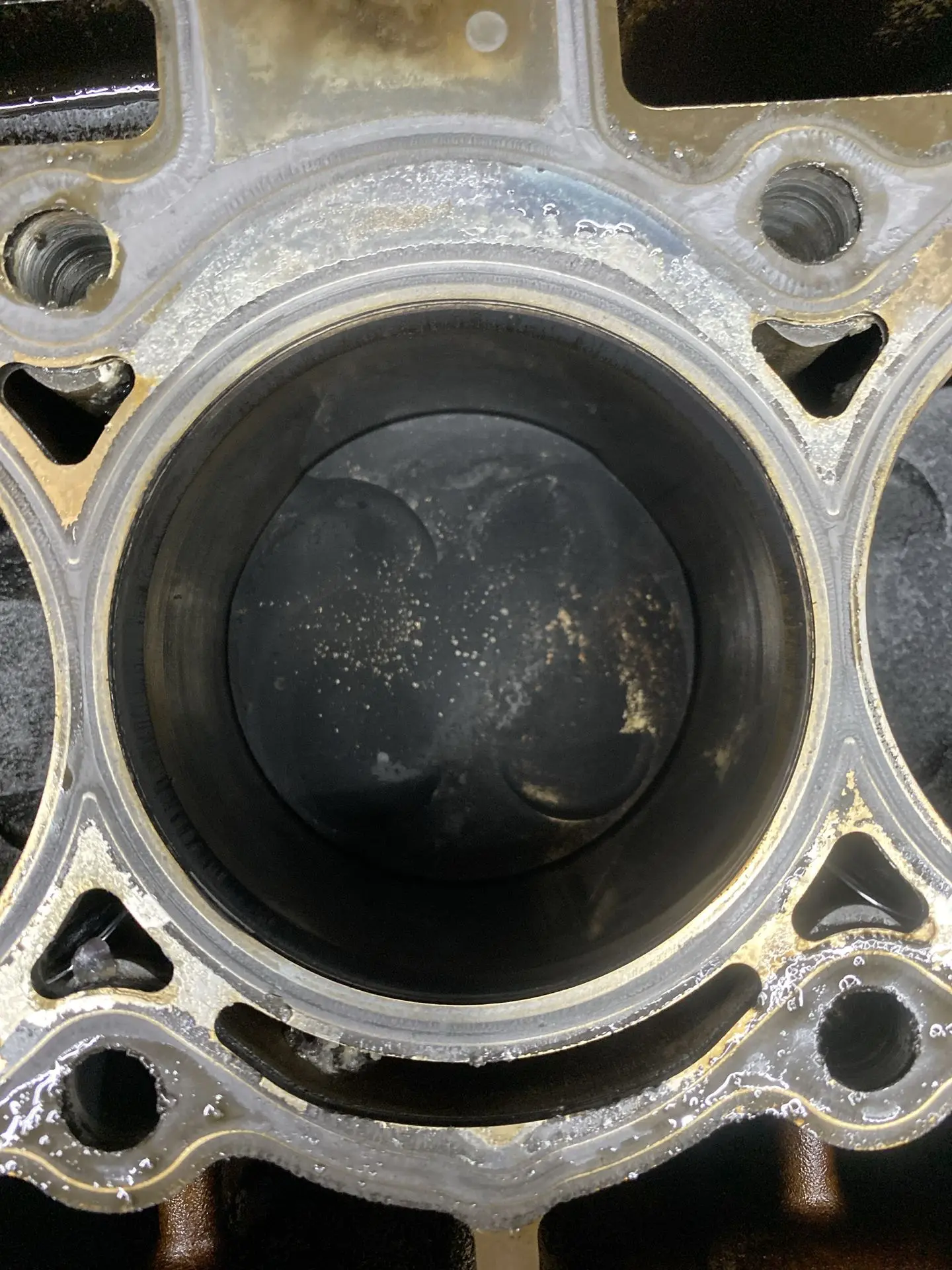



Time for the repair
Once we are sure the piston rings are still good, we start the repair. We checked this by pouring 5W-30 oil onto the pistons. After an hour there was still no sign of the oil having leaked past the piston rings. So we leave it for 12 hours and then look again. There was still oil in all cylinders; piston 2 had not even dropped at all. This is a good result, so we are sure this is in order.
Had the oil run through in half an hour, we would have known there was a problem here. Then it would have made more sense to simply fit a new engine, given the damage to the cylinder head and valves as well.
That is why we also clean the cylinder block and pistons so that all carbon deposits are removed and the cylinder head seals properly again.
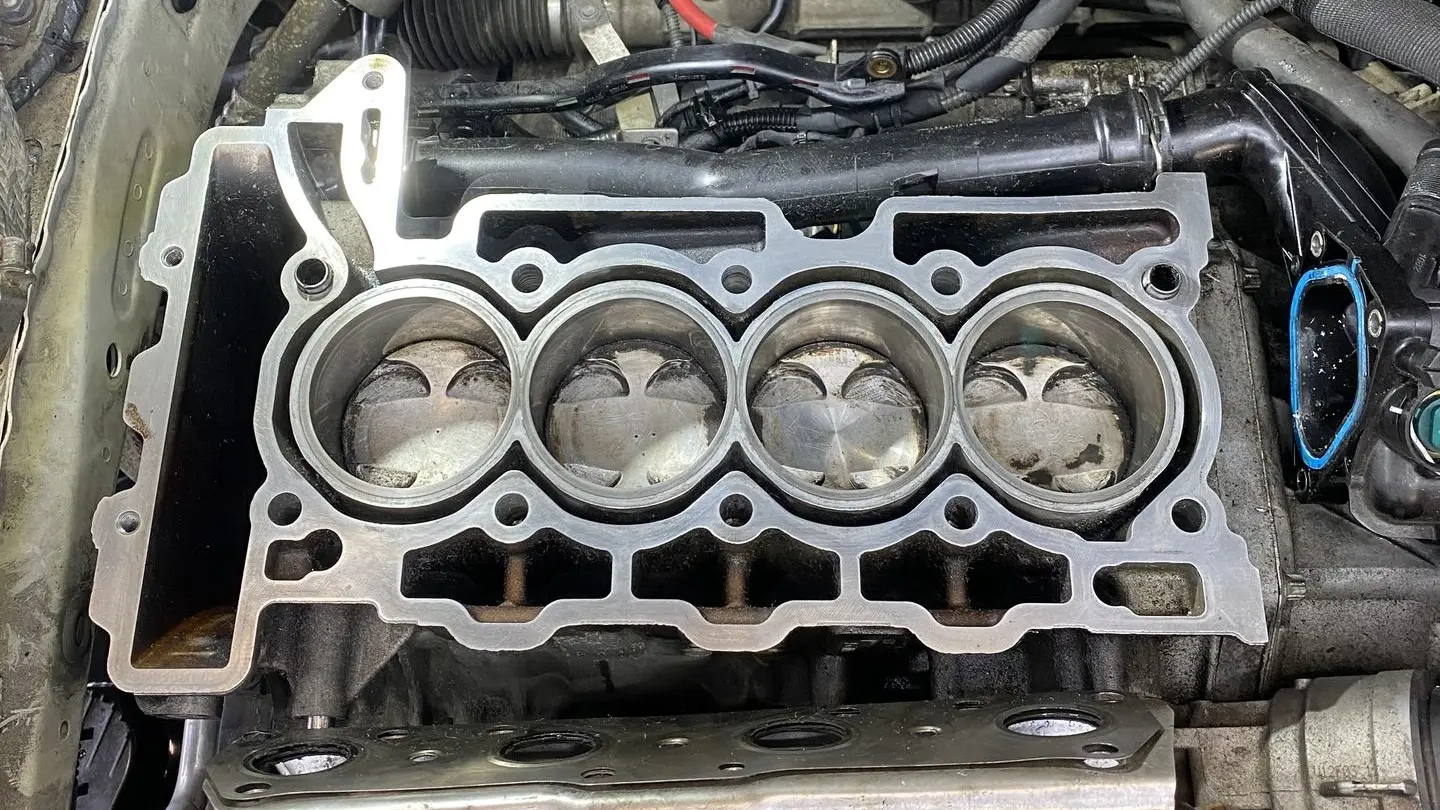
Since the water pump was leaking, we fit a new water pump, with new seals and a new pulley. That way everything is properly in order and new again.
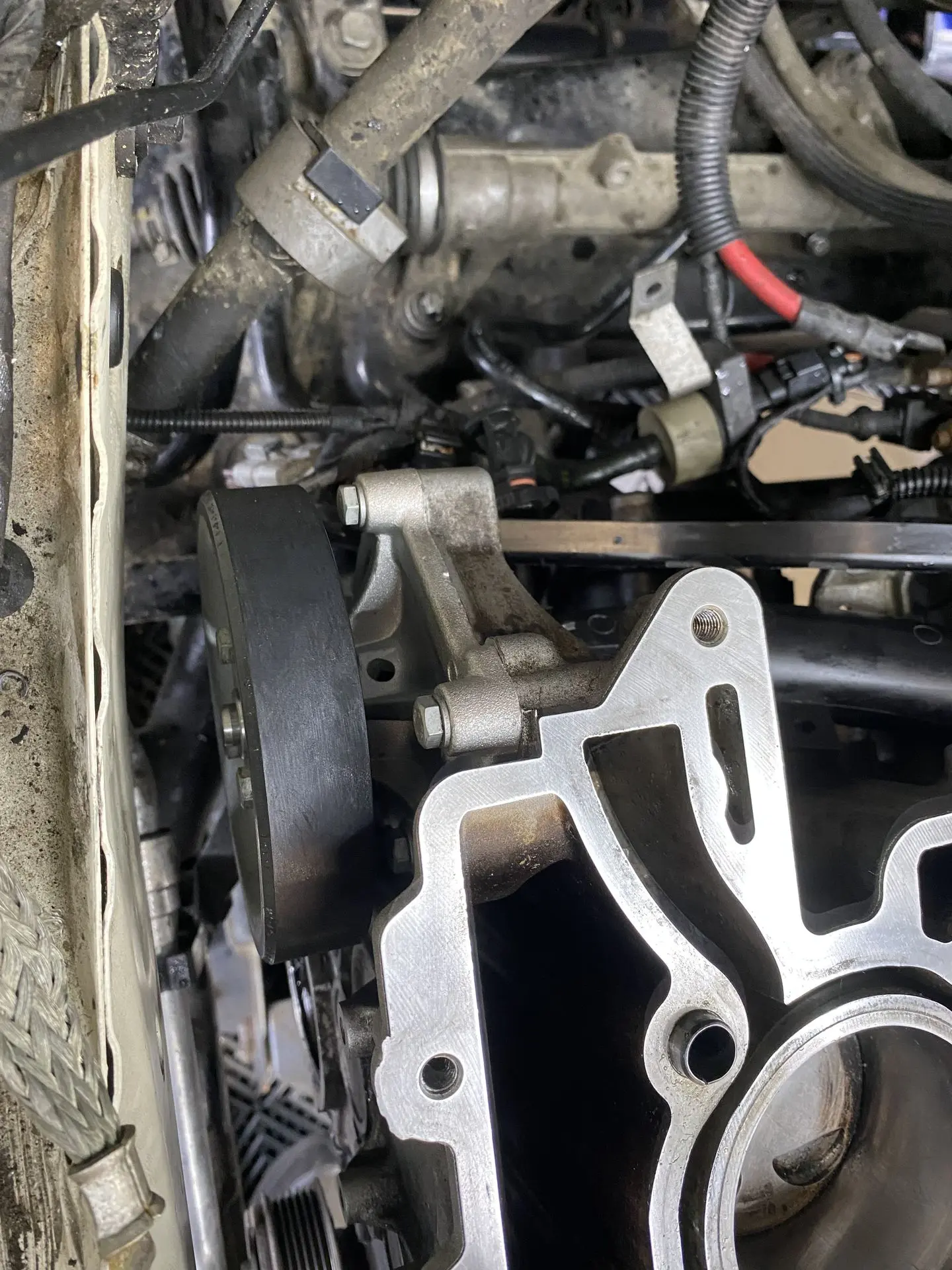
The cylinder head has been completely overhauled and of course also gets a new timing kit and seals right away.
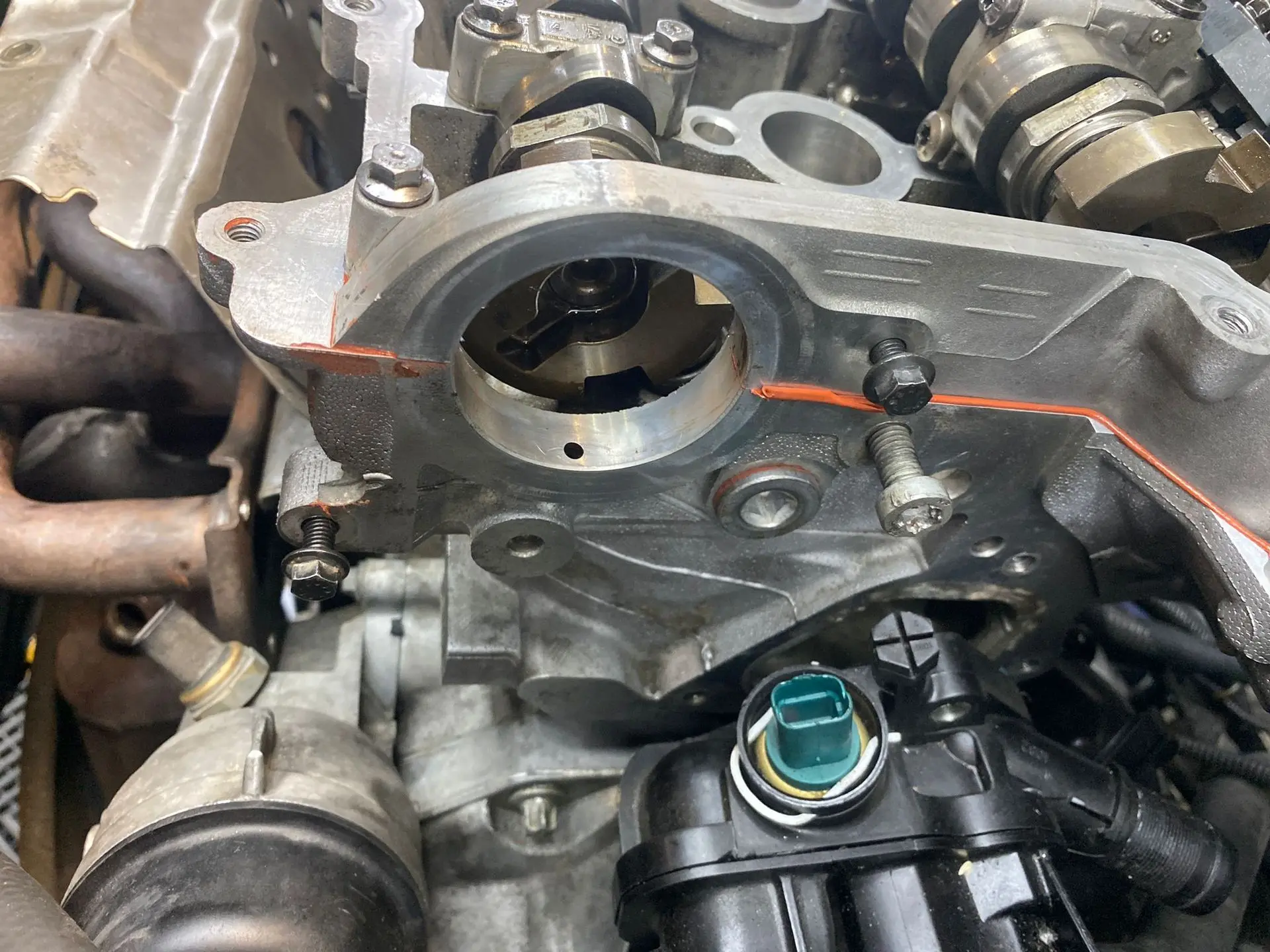
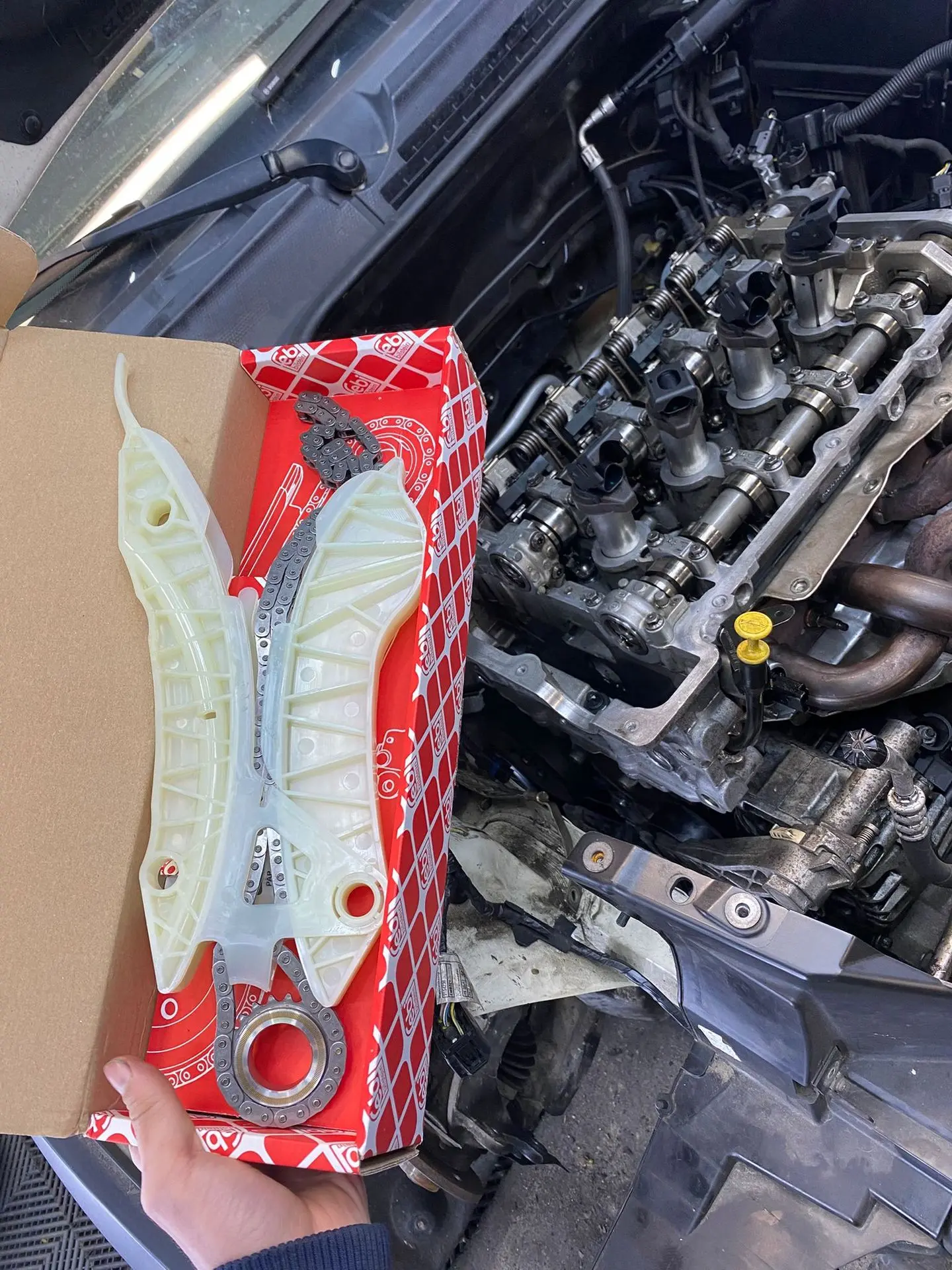
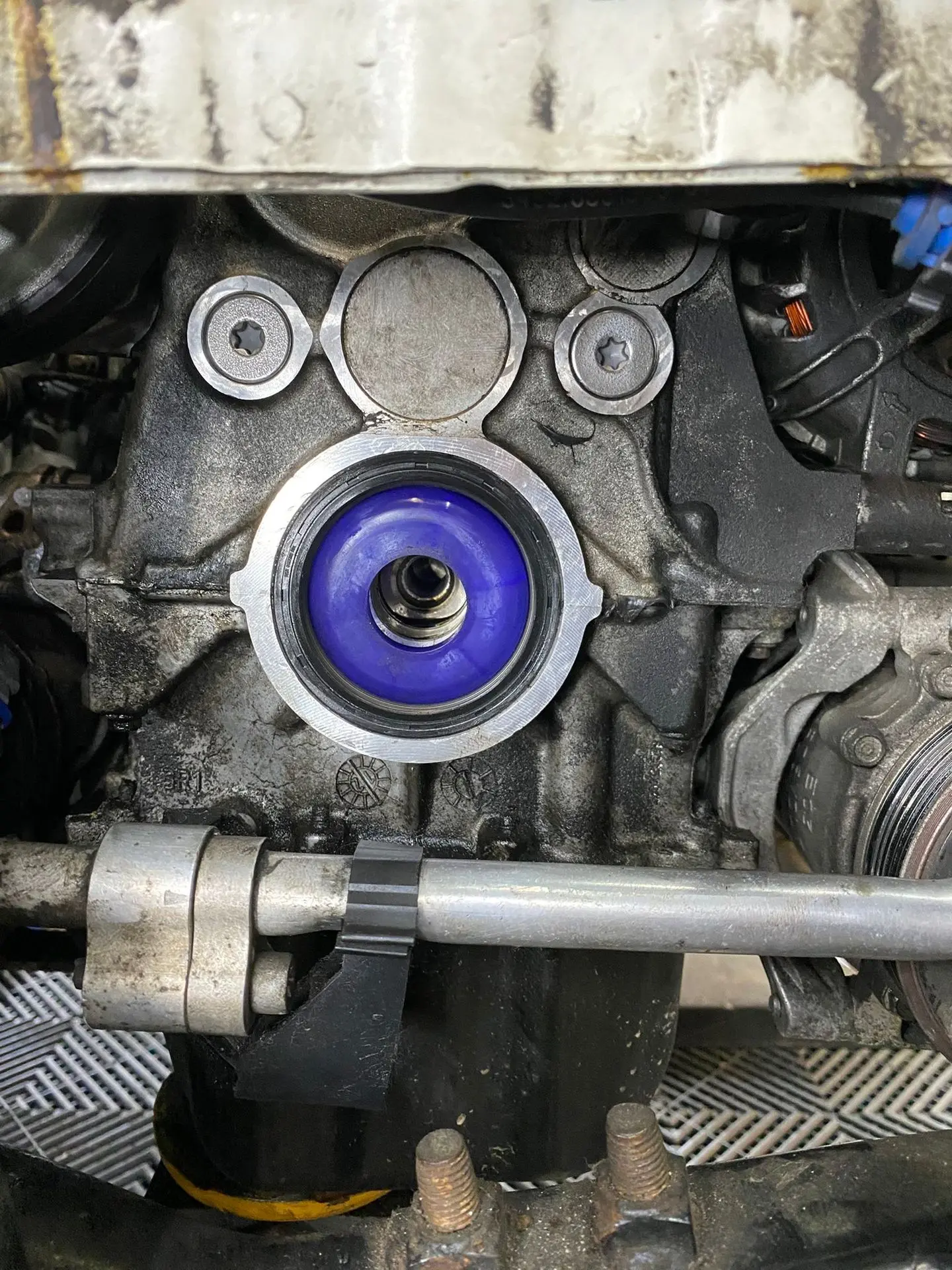
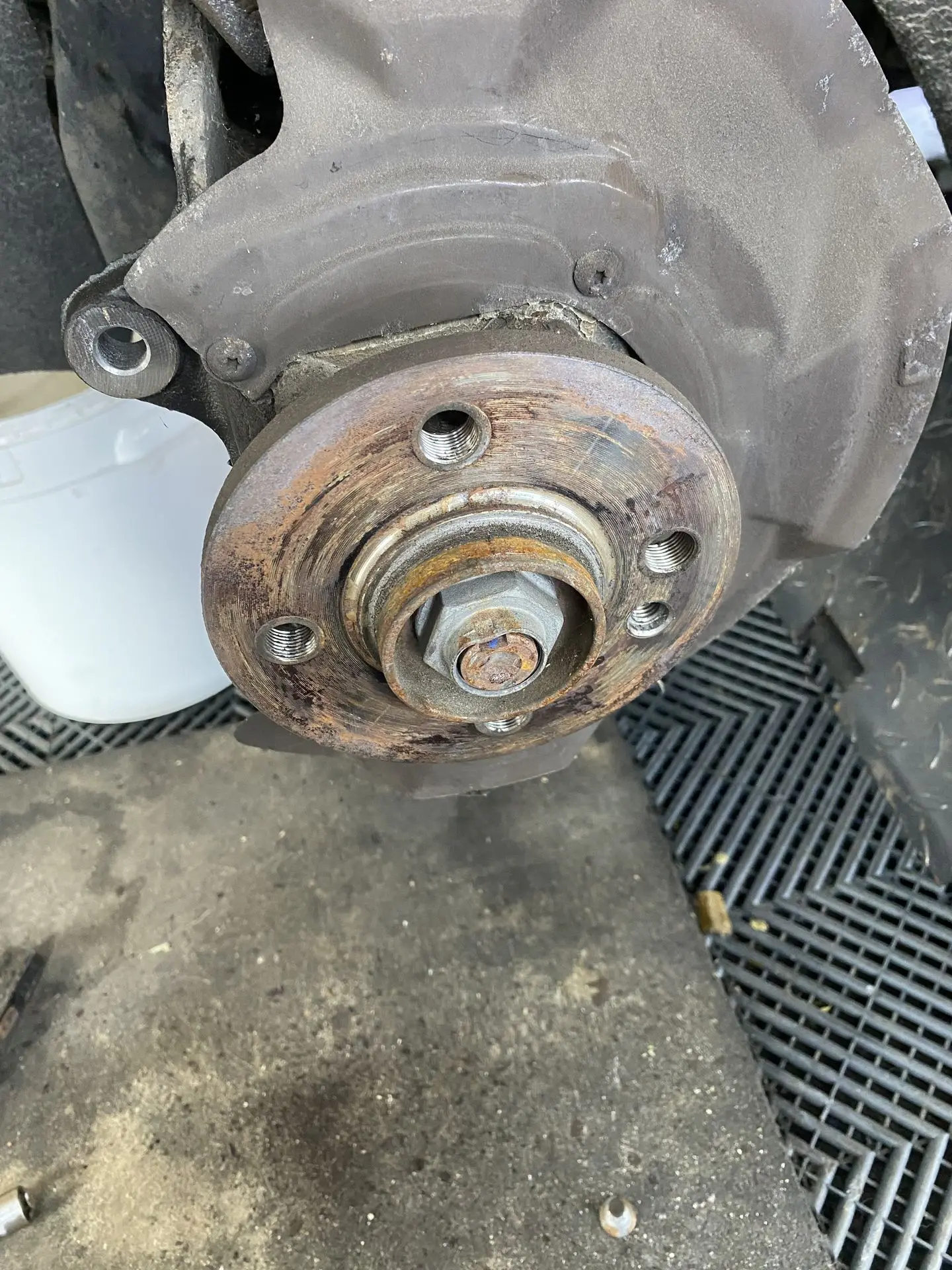
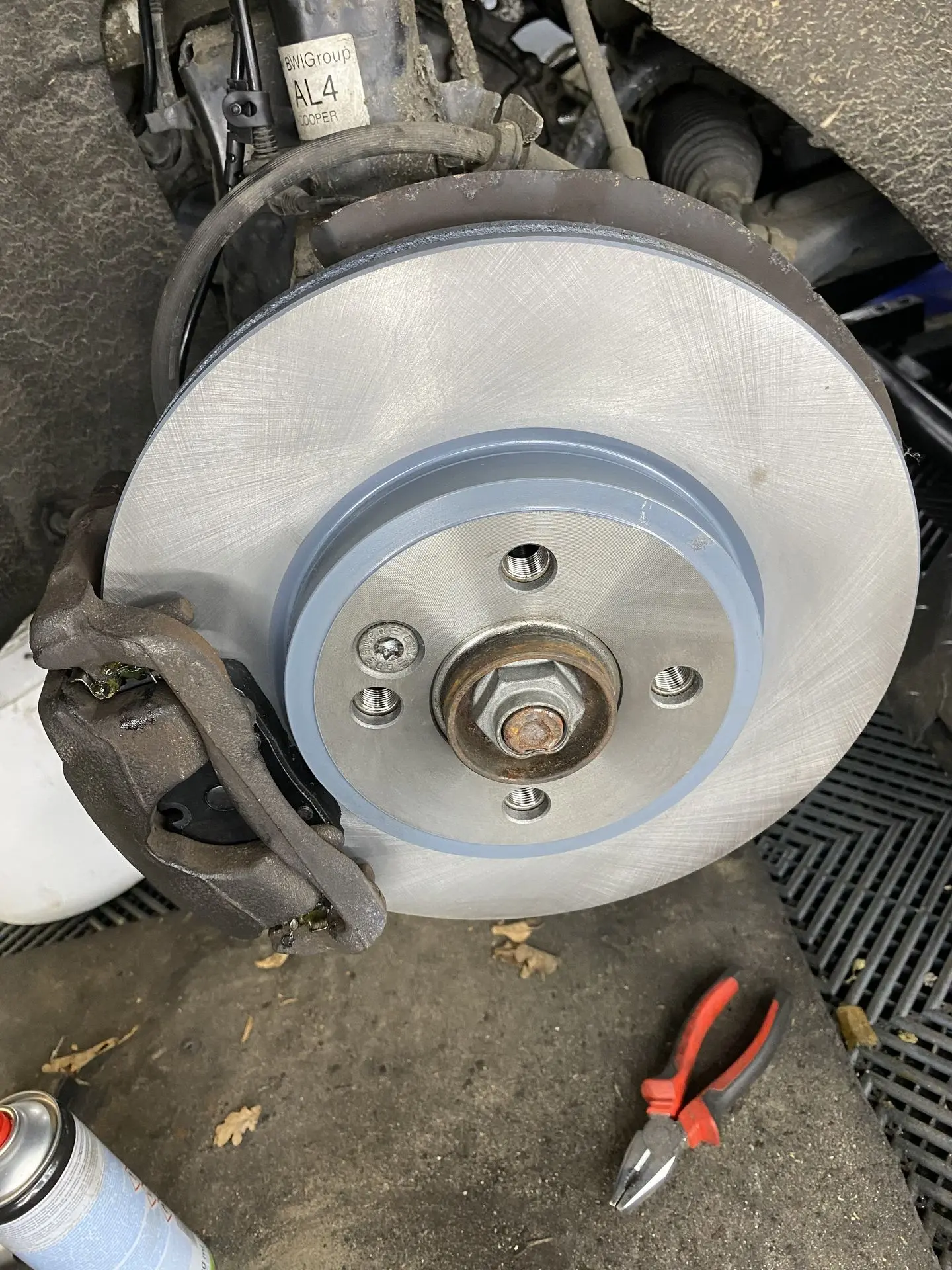
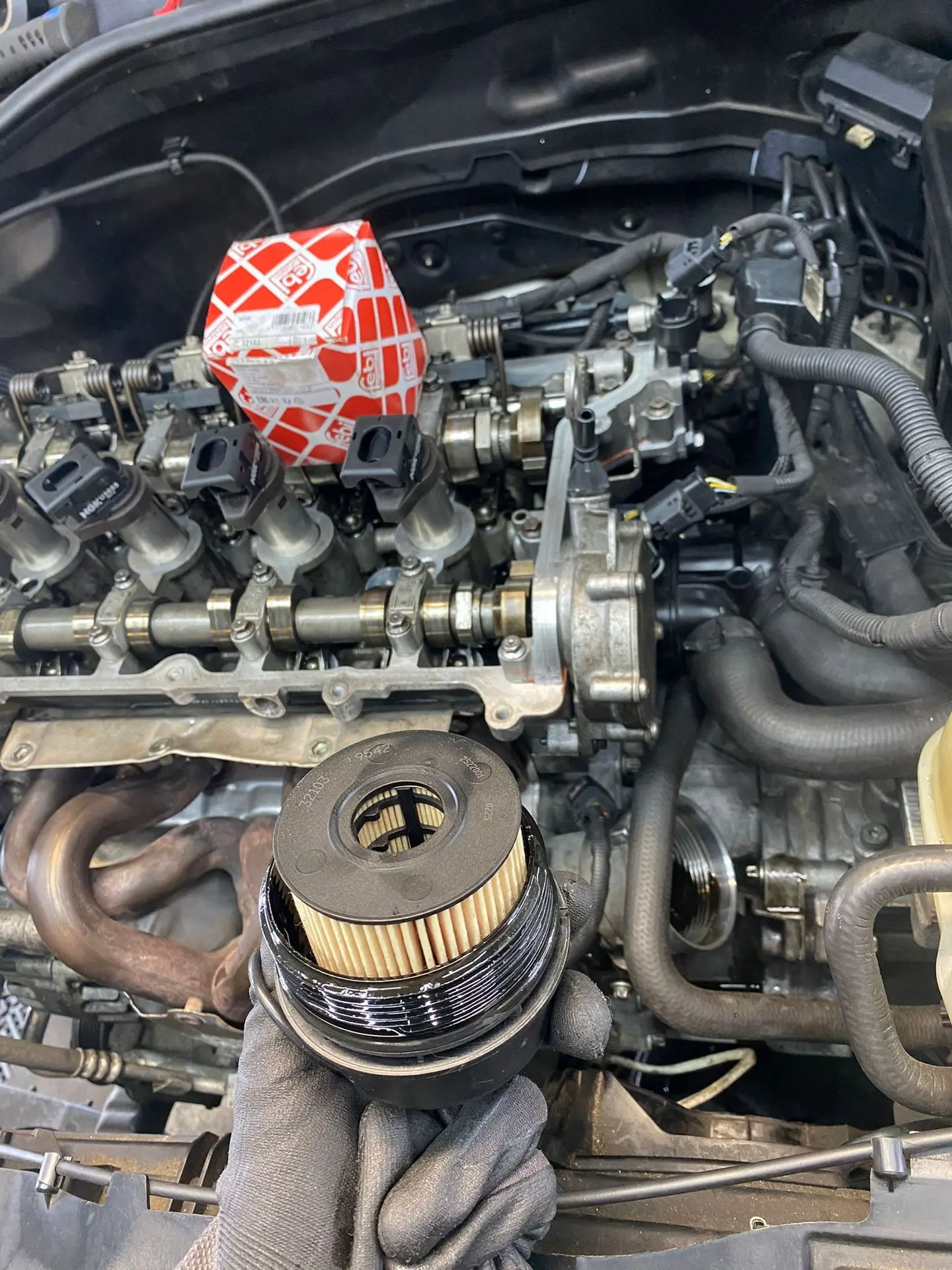
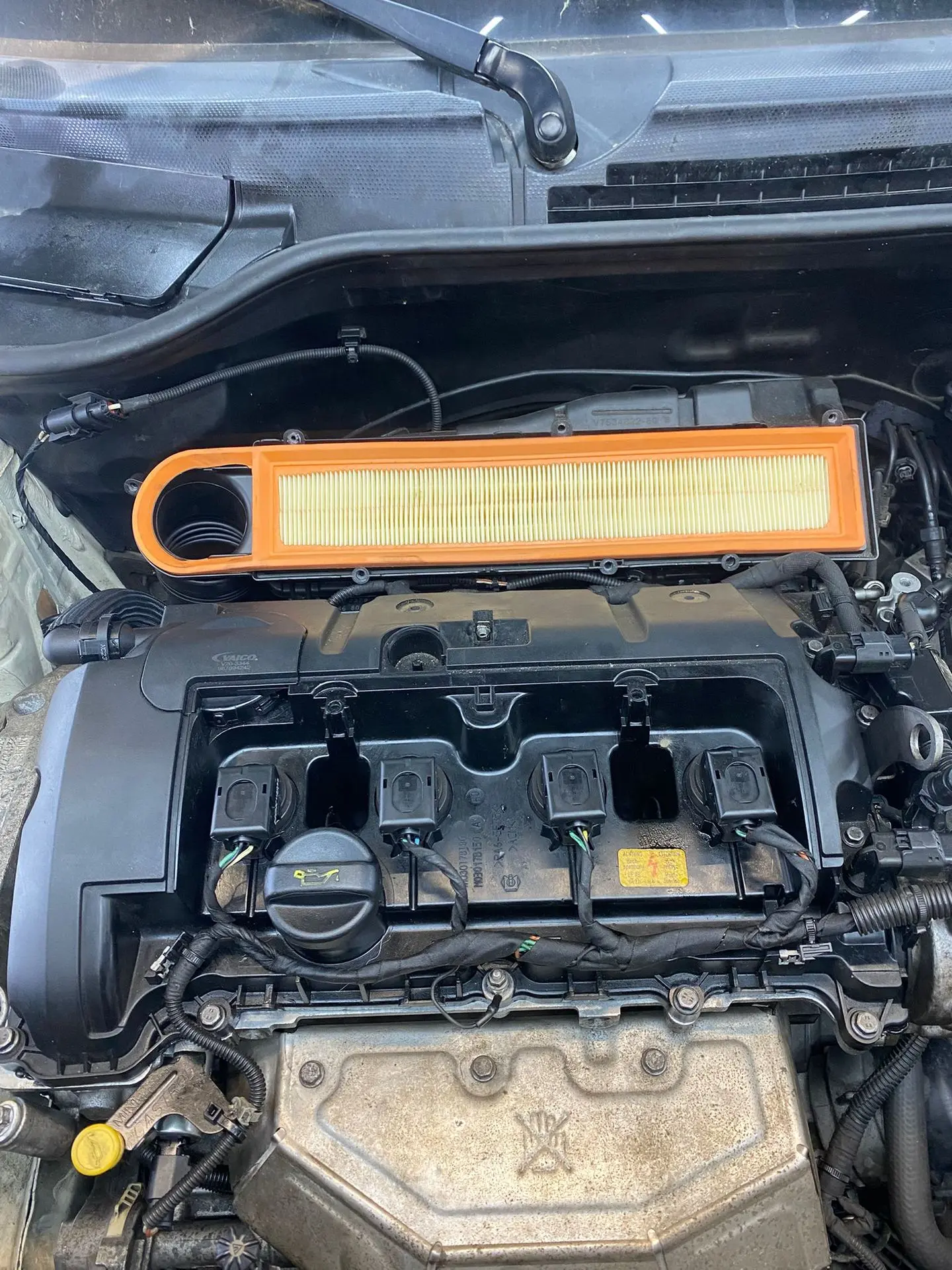
Since this car is being sold by us, we make sure it is completely in order and that the future buyer has no worries for the first 10,000 km. That is why we are also fitting new brake pads, brake discs and a new wear indicator at the front. Together with a new oil filter and air filter, of course.
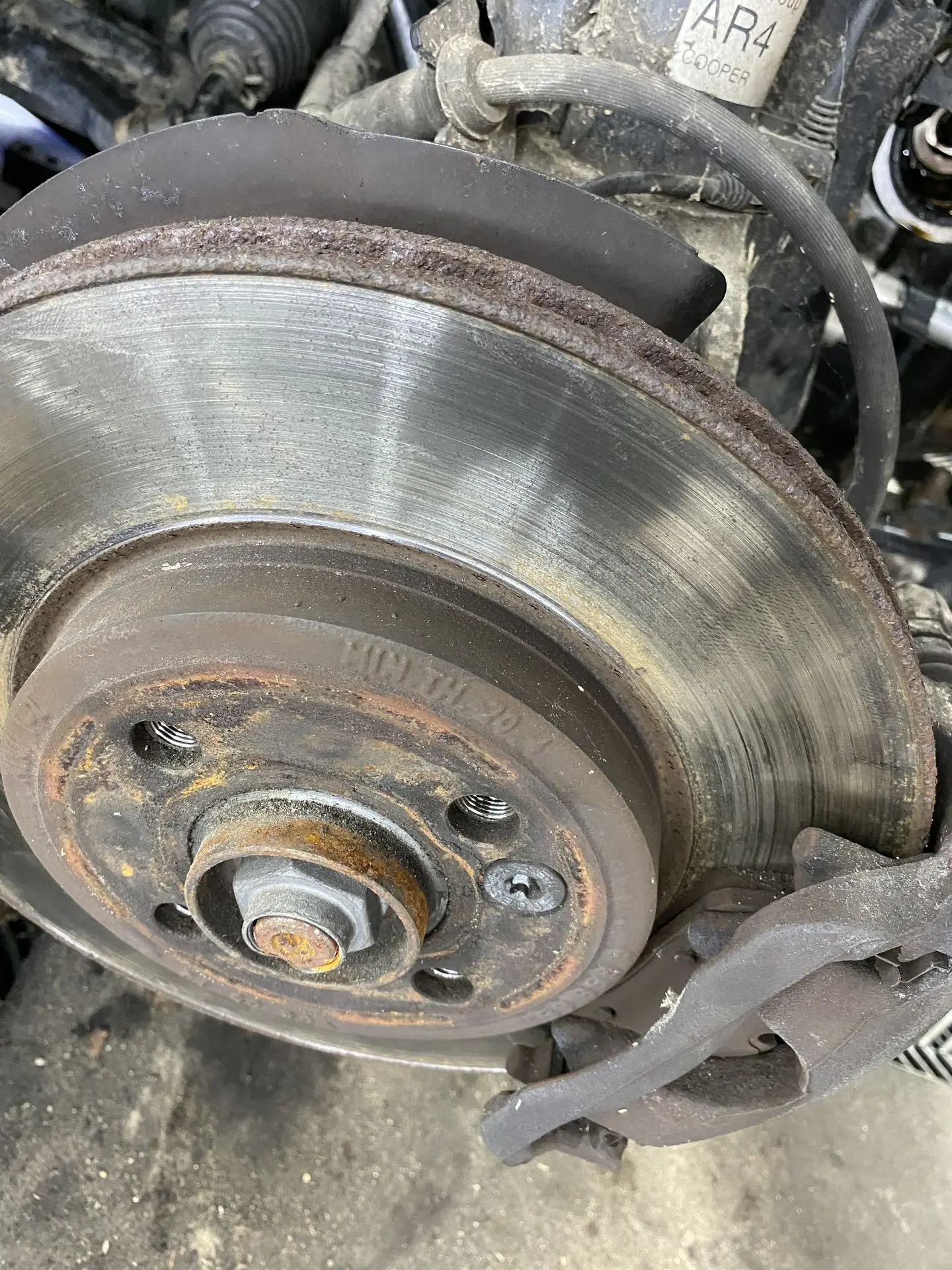
Advice from Bimmerstore
- Never delay a diagnosis with a yellow check engine light.
- Never keep driving with a leaking water pump or coolant loss.
- Acting in time can make the difference between a simple repair and a complete engine rebuild.
👉 Schedule a diagnosis at BimmerStore right away. That way we prevent a small fault from growing into serious engine damage.
BimmerStore is an independent BMW and MINI specialist in Herenthout (province of Antwerp, Belgium). We carry out repairs on BMW and MINI in our own workshop, by appointment.
Why you should never keep driving with a check engine light on – case study MINI One 1.6i N13